Second Triptych of Valle Castellana
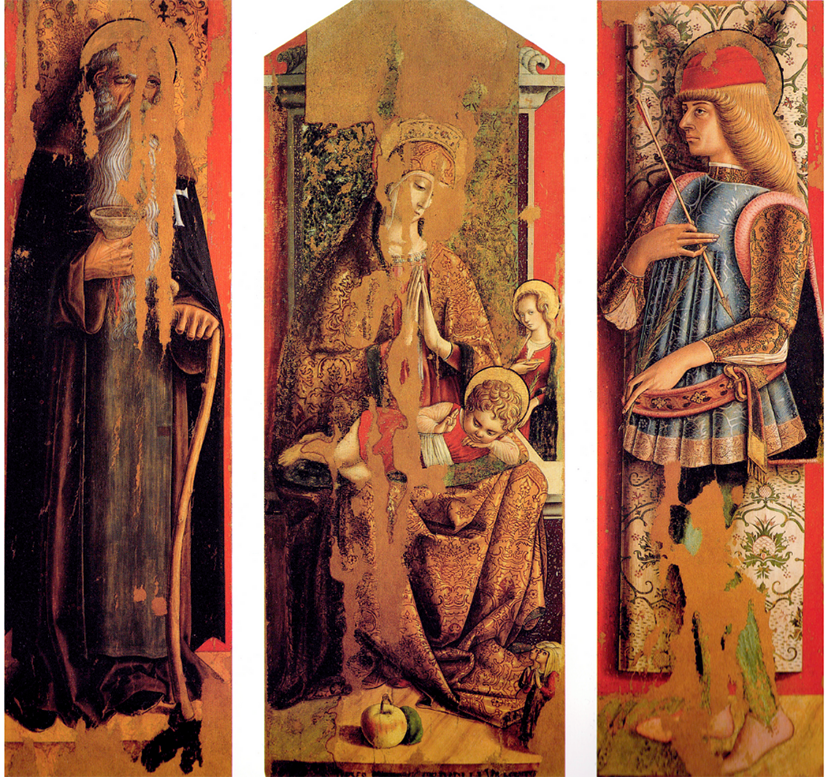
The three panels constituted the second triptych for the church of San Vito in Valle Castellana and are now preserved in the Civic Art Gallery of Ascoli Piceno. Unfortunately, the work is missing its original frame, which once held the panels together, and some parts of the painting have been lost, leaving space for numerous reworked sections from later restorations.
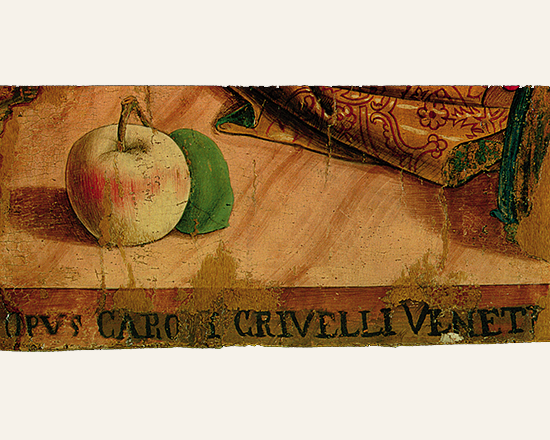
On the front of the step in the central panel, the artist's signature is visible: “OPVS KAROLI CRIVELLI VENETI.” The first to attribute the panels to Crivelli was Luigi Serra (1925), although Frey (1927), due to the poor state of preservation, considered it a forgery. Later, Bernard Berenson definitively included the Second Valle Castellana Triptych among Crivelli's works, dating it to the same years as the first triptych for the same church. Anna Bovero later suggested that Pietro Alemanno may have collaborated in painting the small Saint Lucy behind the throne.
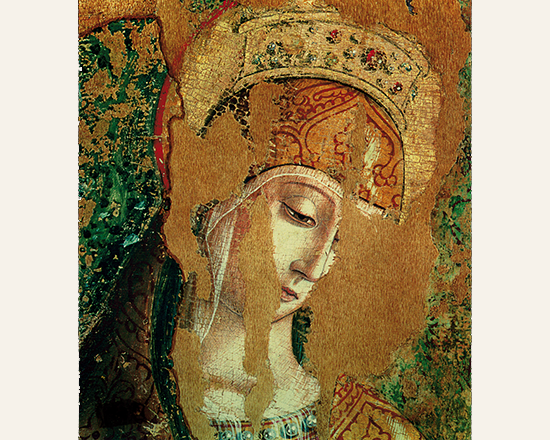
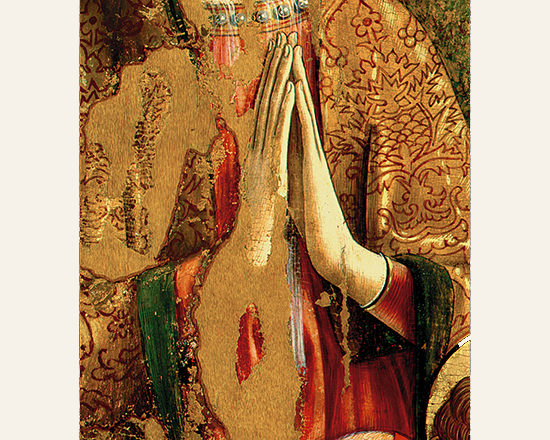
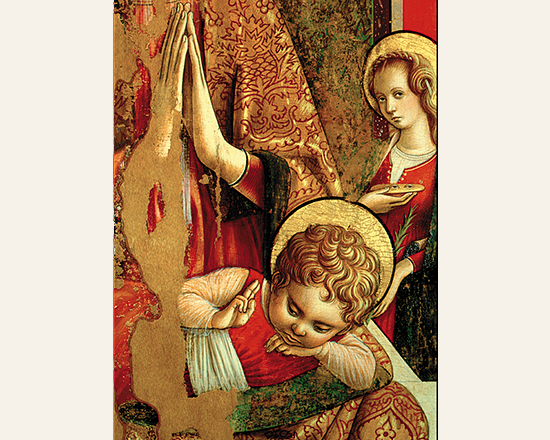
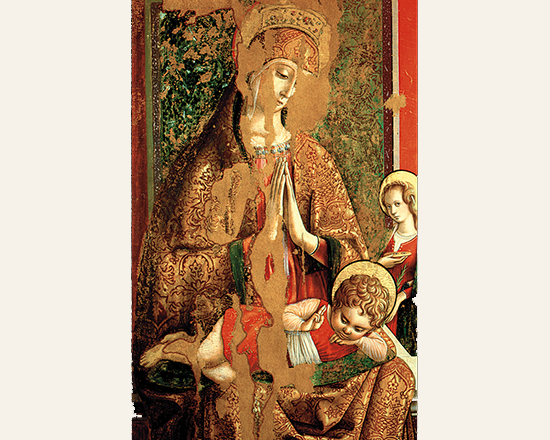
In the central panel, the Madonna is shown with hands clasped in prayer, gazing at the Baby Jesus. Behind her hangs a green cloth of honour with thistle motifs, while the throne is rendered in faux red porphyry, a detail often used by Crivelli. To the right of the Madonna is a small Saint Lucy, identifiable by the palm of martyrdom in one hand and the plate with her eyes in the other.
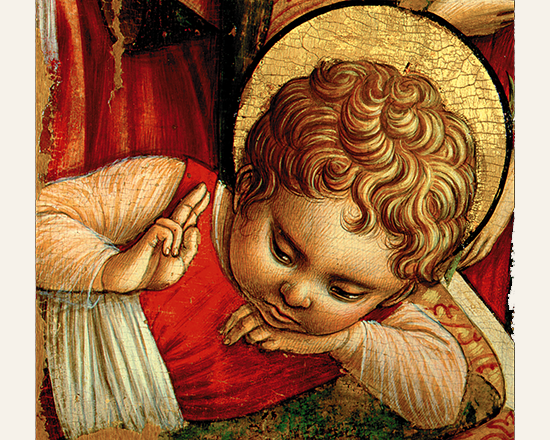
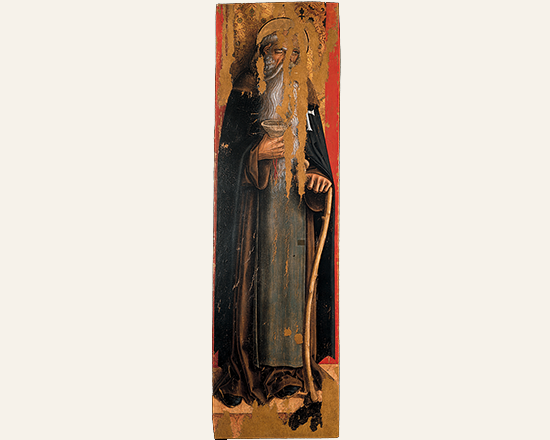
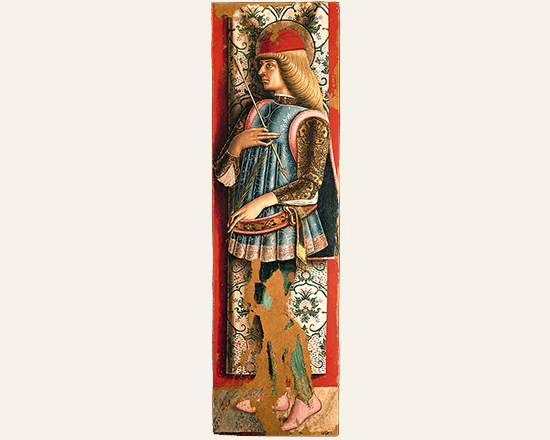
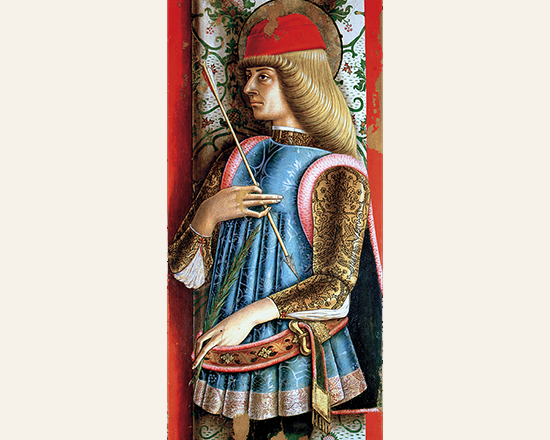
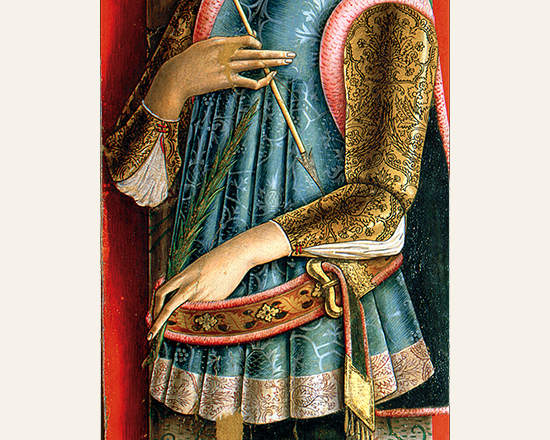
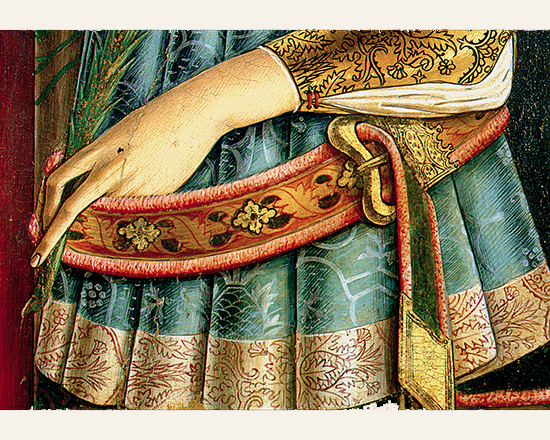
The Child lies on his mother’s knees and blesses the young patrons depicted in the lower right. On the right panel, Saint Sebastian appears dressed as a nobleman, holding a long arrow in one hand and the palm in the other. The left panel shows Saint Anthony the Abbot, depicted as an elderly man with a long white beard, leaning on a wooden staff and ringing a bell.
Madonna di Corridonia — Madonna del latte
Carlo Crivelli created a beautiful Madonna del latte (Madonna of the Milk) for the altar of the Madonna della Concezione in the church of Santa Maria della Misericordia, also called Santa Maria di Gesù, in Montolmo (now Corridonia). The Venetian artist was commissioned between 1471, the year of the church’s construction, and 1474–1476, coinciding with the foundation of the Compagnia del Santissimo Sacramento.
An inventory from 1727, discovered by Giuliana Pascucci, records the panel on its original altar. In 1765 it was moved to a niche beside the entrance door of the church of Sant’Agostino, then to the sacristy in 1884. Finally, in 1952 it entered the Parish Art Gallery of Corridonia, where it remains today.
In the 16th century the work underwent a “modernisation,” with the addition of two side panels depicting angels. These were still visible in an Alinari photograph from the 1905 Macerata Exhibition, but were removed during a 1950 restoration.
The painting was attributed to Crivelli by Cavalcaselle and Morelli (1896). It depicts a Madonna seated on a throne, surrounded by a cloud of cherubs and seraphim, breastfeeding the Child, who turns towards the viewer with a surprised expression. The background is painted blue instead of gilded, though precious metal leaf was applied to the halos, the Virgin’s crown, and the details of the garments.
In 1986, Pietro Zampetti suggested the panel was originally the central compartment of a triptych similar to those in Valle Castellana, and compared it stylistically to the Madonna of Poggio di Bretta and the panels by Pietro Alemanno in Montefortino. Giuliana Pascucci instead hypothesised it was a single-panel work, comparing it to the Madonna in the Ascoli Cathedral polyptych and to the 1476 Madonna for San Domenico in Ascoli.
Recently, Francesca Coltrinari linked the foreshortened face of the Child to figures painted by Crivelli in the Demidoff polyptych, the Second Valle Castellana Triptych (Ascoli), and the Madonna Lenti, now in the Metropolitan Museum of New York.
Carlo Crivelli
Secondo Trittico di Valle Castellana, 1472 ca
Tempera su tavola
Pannello centrale: 132×50 cm
Pannelli laterali: ciascuno 132×39 cm
Firmato: OPUS CAROLI CRIVELLI VENETI
Pinacoteca Civica
Piazza Arringo
Ascoli Piceno
Descrizione
Madonna con il Bambino, S. Lucia e committenti; S. Antonio Abate; S. Sebastiano
Second Triptych of Valle Castellana
The three panels constituted the second triptych for the church of San Vito in Valle Castellana and are now preserved in the Civic Art Gallery of Ascoli Piceno. Unfortunately, the work is missing its original frame, which once held the panels together, and some parts of the painting have been lost, leaving space for numerous reworked sections from later restorations.
On the front of the step in the central panel, the artist's signature is visible: “OPVS KAROLI CRIVELLI VENETI.” The first to attribute the panels to Crivelli was Luigi Serra (1925), although Frey (1927), due to the poor state of preservation, considered it a forgery. Later, Bernard Berenson definitively included the Second Valle Castellana Triptych among Crivelli's works, dating it to the same years as the first triptych for the same church. Anna Bovero later suggested that Pietro Alemanno may have collaborated in painting the small Saint Lucy behind the throne.
In the central panel, the Madonna is shown with hands clasped in prayer, gazing at the Baby Jesus. Behind her hangs a green cloth of honour with thistle motifs, while the throne is rendered in faux red porphyry, a detail often used by Crivelli. To the right of the Madonna is a small Saint Lucy, identifiable by the palm of martyrdom in one hand and the plate with her eyes in the other.
The Child lies on his mother’s knees and blesses the young patrons depicted in the lower right. On the right panel, Saint Sebastian appears dressed as a nobleman, holding a long arrow in one hand and the palm in the other. The left panel shows Saint Anthony the Abbot, depicted as an elderly man with a long white beard, leaning on a wooden staff and ringing a bell.
Madonna di Corridonia — Madonna del latte
Carlo Crivelli created a beautiful Madonna del latte (Madonna of the Milk) for the altar of the Madonna della Concezione in the church of Santa Maria della Misericordia, also called Santa Maria di Gesù, in Montolmo (now Corridonia). The Venetian artist was commissioned between 1471, the year of the church’s construction, and 1474–1476, coinciding with the foundation of the Compagnia del Santissimo Sacramento.
An inventory from 1727, discovered by Giuliana Pascucci, records the panel on its original altar. In 1765 it was moved to a niche beside the entrance door of the church of Sant’Agostino, then to the sacristy in 1884. Finally, in 1952 it entered the Parish Art Gallery of Corridonia, where it remains today.
In the 16th century the work underwent a “modernisation,” with the addition of two side panels depicting angels. These were still visible in an Alinari photograph from the 1905 Macerata Exhibition, but were removed during a 1950 restoration.
The painting was attributed to Crivelli by Cavalcaselle and Morelli (1896). It depicts a Madonna seated on a throne, surrounded by a cloud of cherubs and seraphim, breastfeeding the Child, who turns towards the viewer with a surprised expression. The background is painted blue instead of gilded, though precious metal leaf was applied to the halos, the Virgin’s crown, and the details of the garments.
In 1986, Pietro Zampetti suggested the panel was originally the central compartment of a triptych similar to those in Valle Castellana, and compared it stylistically to the Madonna of Poggio di Bretta and the panels by Pietro Alemanno in Montefortino. Giuliana Pascucci instead hypothesised it was a single-panel work, comparing it to the Madonna in the Ascoli Cathedral polyptych and to the 1476 Madonna for San Domenico in Ascoli.
Recently, Francesca Coltrinari linked the foreshortened face of the Child to figures painted by Crivelli in the Demidoff polyptych, the Second Valle Castellana Triptych (Ascoli), and the Madonna Lenti, now in the Metropolitan Museum of New York.