Triptych of Valle Castellana
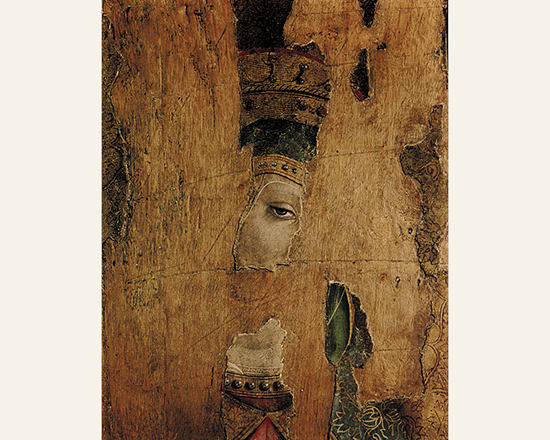
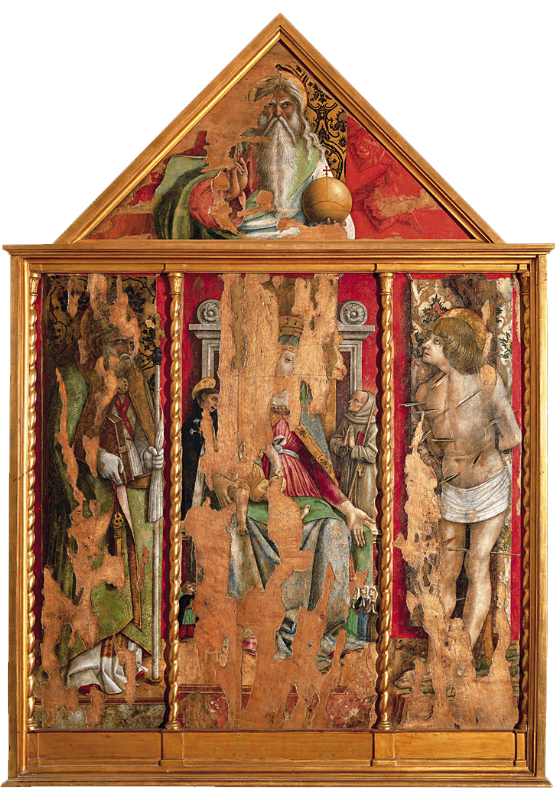
We are faced with a work that is very incomplete and partly illegible due to its state of preservation. The triptych was created by Carlo Crivelli for the church of San Vito in Valle Castellana, in the province of Teramo, but today it is on display in the rooms of the Civic Art Gallery of Ascoli Piceno.
The frame that holds the work together is the result of a modern reworking, as the polyptych probably did not originally look like this.
The work was attributed to Carlo Crivelli by Luigi Serra (1925), but shortly afterwards Franz Drey, in his 1927 monograph, attributed it to Pietro Alemanno. Subsequently, Bernard Berenson definitively included the Valle Castellana Triptych among Crivelli's works and dated it between 1470 and 1473.
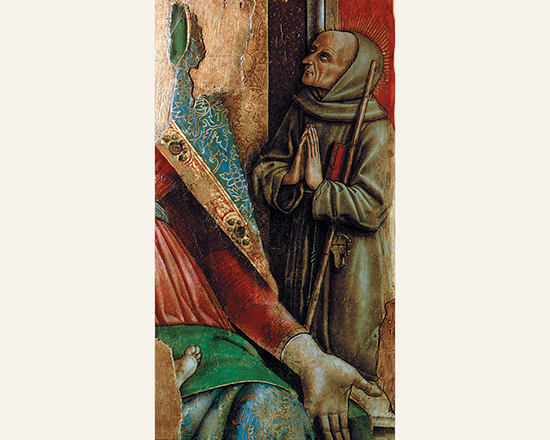
The central panel, larger than the side panels, depicts a Madonna enthroned with the Child seated on her thigh. The throne is the same as that in the small Madonna and Child of Poggio di Bretta, and the Virgin’s garments are also the same, albeit richer in detail. Next to the two main figures are small representations of a Dominican saint and the Blessed Giacomo della Marca. The former could be identified as St. Dominic, as he carries a white lily — one of his attributes — while the Blessed is recognizable because he wears a halo rather than the disc-shaped nimbus used for saints.
The Virgin holds the Child in one hand, while with the other she reaches down towards the faithful who commissioned the work.
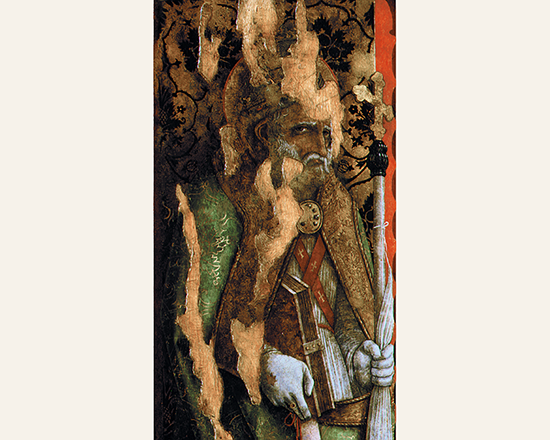
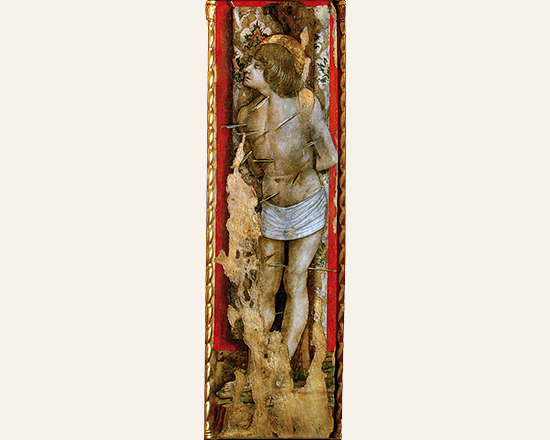
The triptych includes two narrower side panels depicting Saints Sebastian and Peter. The martyr is shown tied to a tree trunk, pierced by numerous arrows, while Saint Peter is recognizable by the two keys to Paradise he carries.
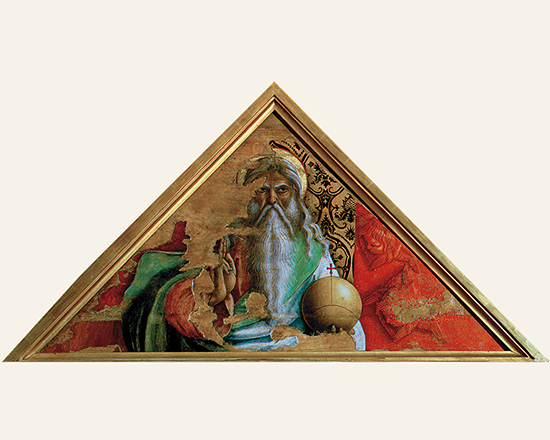
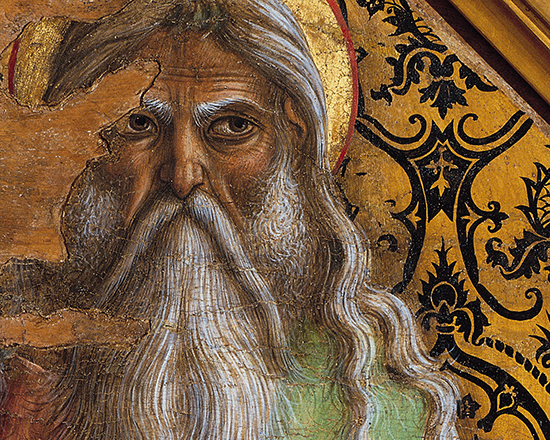
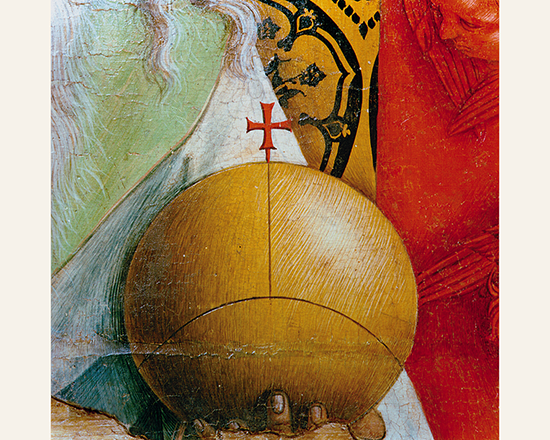
The work concludes at the top with a triangular spire, where Carlo painted God the Father blessing and holding a sphere symbolizing the globe.
The entire work differs from others in that it features a red background instead of the usual gold leaf. To make the figures stand out, drapes of honour have been added — an Adriatic tradition of Venetian origin that persisted into the 14th century.
Carlo Crivelli
Primo Trittico di Valle Castellana, 1472 ca
Tempera su tavola, complessivi 205×145 cm (compresa la cornice moderna)
Pinacoteca Civica
Piazza Arringo
Ascoli Piceno
Descrizione
Madonna col Bambino tra un Santo domenicano e il Beato Giacomo della Marca e piccoli fedeli oranti; S. Pietro Apostolo, S. Sebastiano; nella cuspide il Padre Eterno
Triptych of Valle Castellana
We are faced with a work that is very incomplete and partly illegible due to its state of preservation. The triptych was created by Carlo Crivelli for the church of San Vito in Valle Castellana, in the province of Teramo, but today it is on display in the rooms of the Civic Art Gallery of Ascoli Piceno.
The frame that holds the work together is the result of a modern reworking, as the polyptych probably did not originally look like this.
The work was attributed to Carlo Crivelli by Luigi Serra (1925), but shortly afterwards Franz Drey, in his 1927 monograph, attributed it to Pietro Alemanno. Subsequently, Bernard Berenson definitively included the Valle Castellana Triptych among Crivelli's works and dated it between 1470 and 1473.
The central panel, larger than the side panels, depicts a Madonna enthroned with the Child seated on her thigh. The throne is the same as that in the small Madonna and Child of Poggio di Bretta, and the Virgin’s garments are also the same, albeit richer in detail. Next to the two main figures are small representations of a Dominican saint and the Blessed Giacomo della Marca. The former could be identified as St. Dominic, as he carries a white lily — one of his attributes — while the Blessed is recognizable because he wears a halo rather than the disc-shaped nimbus used for saints.
The Virgin holds the Child in one hand, while with the other she reaches down towards the faithful who commissioned the work.
The triptych includes two narrower side panels depicting Saints Sebastian and Peter. The martyr is shown tied to a tree trunk, pierced by numerous arrows, while Saint Peter is recognizable by the two keys to Paradise he carries.
The work concludes at the top with a triangular spire, where Carlo painted God the Father blessing and holding a sphere symbolizing the globe.
The entire work differs from others in that it features a red background instead of the usual gold leaf. To make the figures stand out, drapes of honour have been added — an Adriatic tradition of Venetian origin that persisted into the 14th century.