Polyptych, Sant'Elpidio a Mare
The large polyptych was created for the ancient monastery of the Poor Clares of Sant'Elpidio a Mare. Between 1766 and 1770, the structure of the church underwent several alterations, so the polyptych, which was located on the high altar, was moved to the left wall of the choir and the upper side panels were probably dismantled, resulting in the loss of the original frame in that area.
The work was given to the Observant Friars Minor, who kept it until 1860, when it was moved to the Council Chamber of the Town Hall of Sant'Elpidio a Mare. The first to attribute it to Vittore Crivelli was Cantalamessa in 1892, followed by all other scholars.
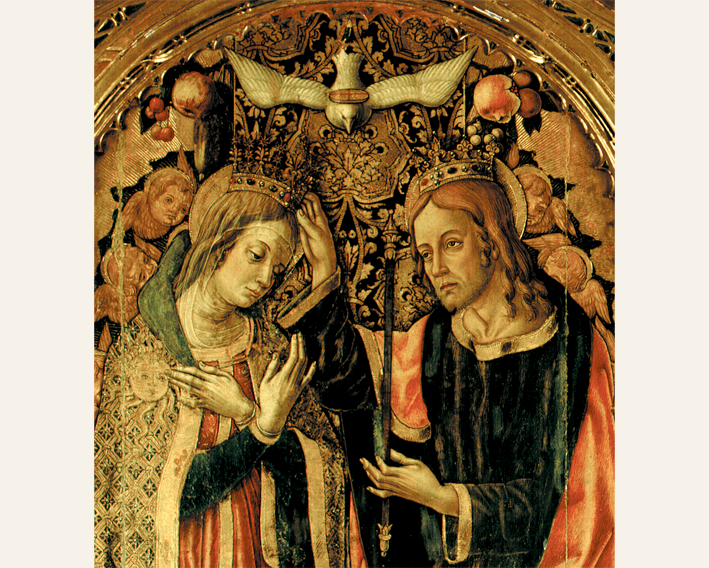
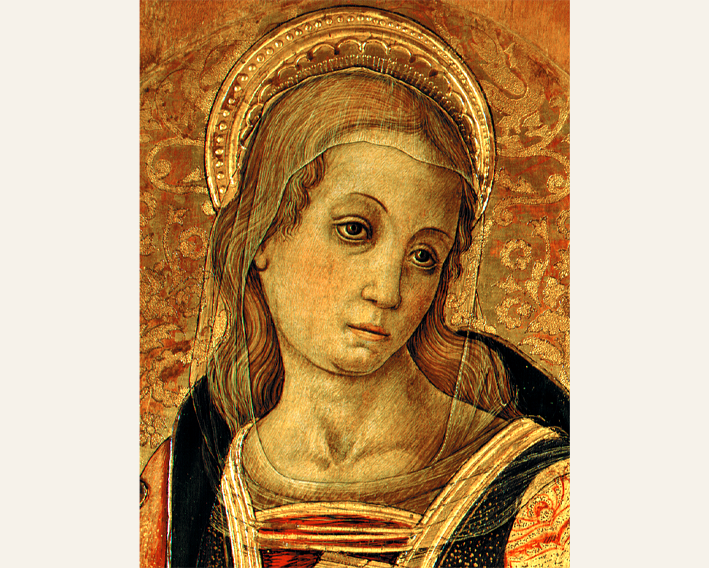
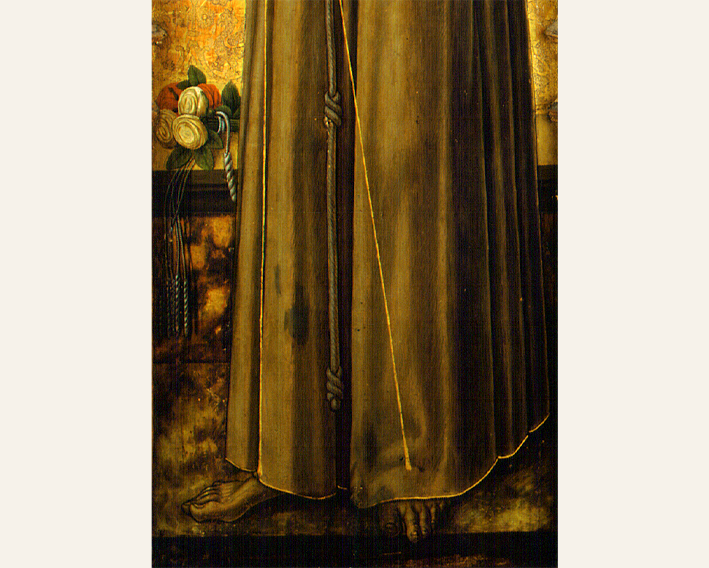
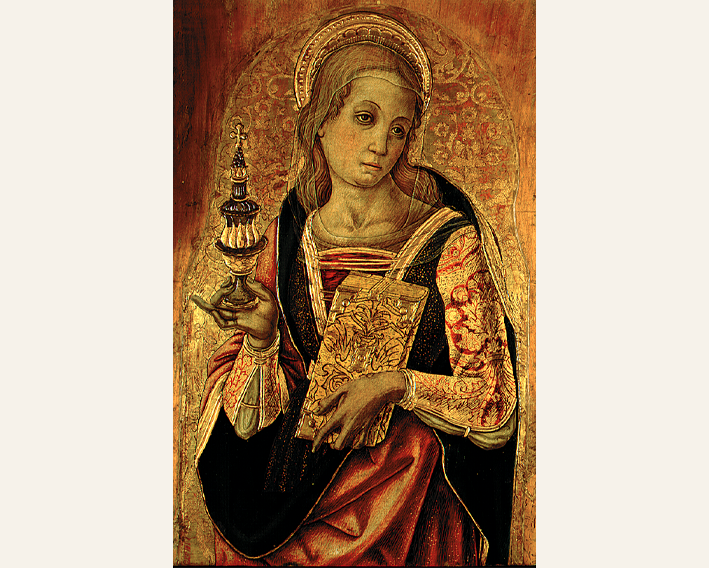
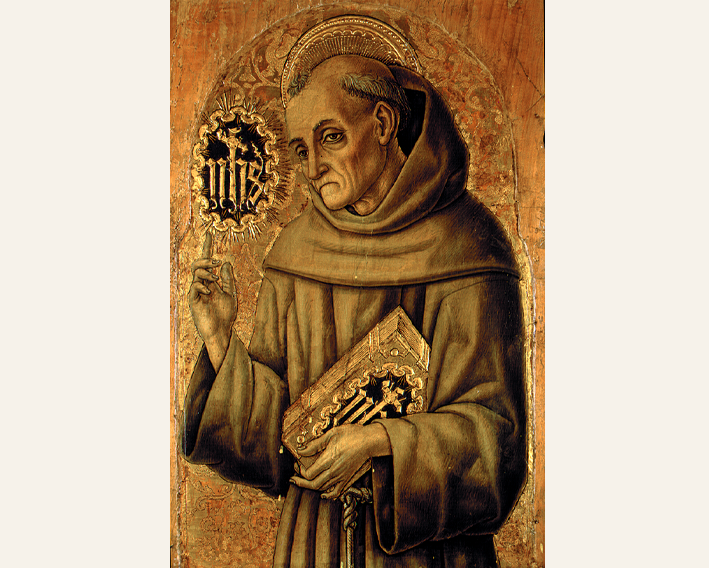
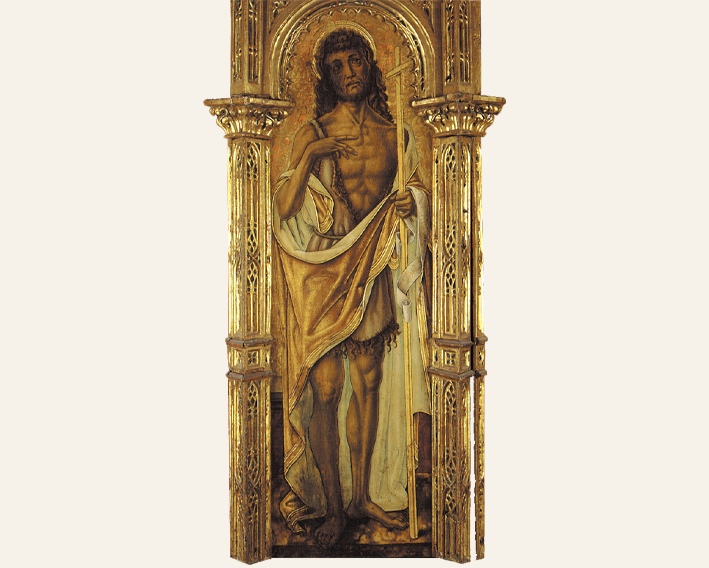
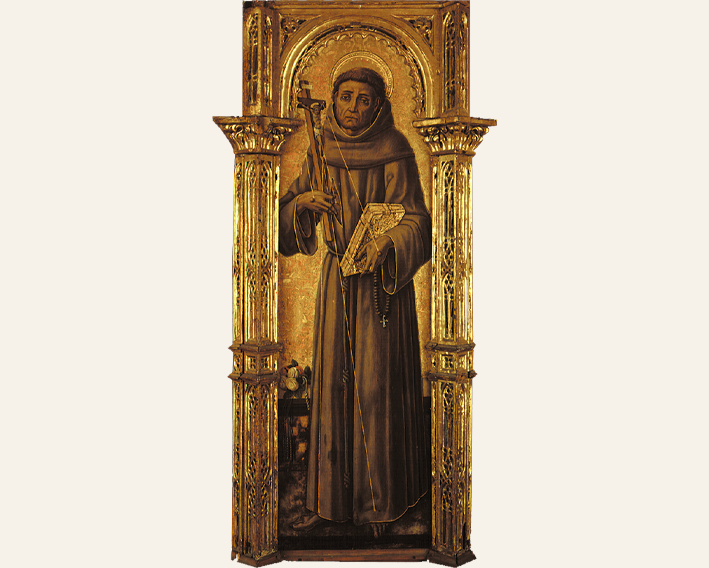
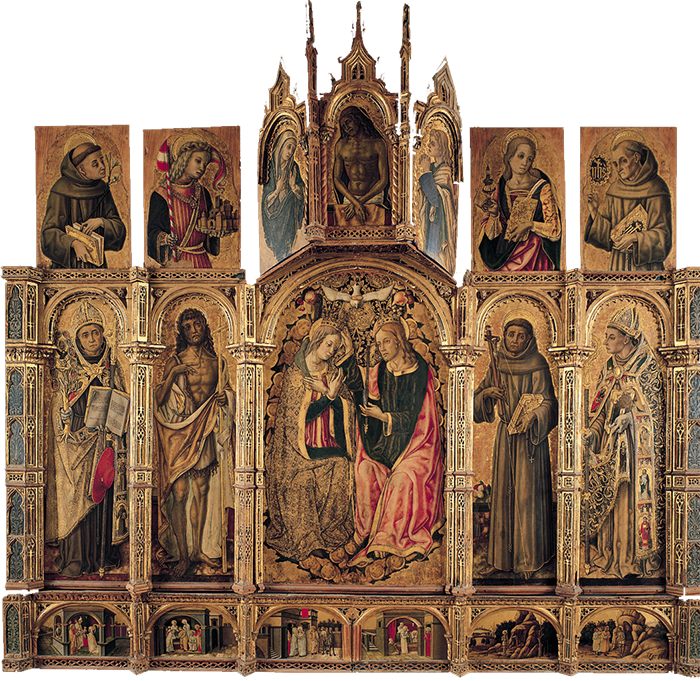
It is a polyptych composed of two registers: in the lower part, in the center, is the scene of the Coronation of the Virgin, while the side panels depict St. Bonaventure, St. John the Baptist, St. Francis, and St. Louis. The upper panels show a projecting tabernacle with the dead Christ and, on either side, the sorrowful Virgin and St. John the Evangelist, and finally, half-length portraits of St. Anthony of Padua, St. Elpidio, St. Mary Magdalene, and St. Bernard.
Supporting the entire weight of the work is a narrative predella, composed of six scenes representing stories from the life of St. John the Baptist, which, starting from the left, are: The Visitation, The Birth of the Baptist, Circumcision and Naming, Presentation in the Temple, The Baptist in the Desert, and Sermon of John the Baptist.
Sandra Di Provvido analyzes the central compartment and writes: “The Coronation of the Virgin is refined in ways that recall the works of Paolo Veneziano, the Vivarini, and Giovanni Bellini, which Carlo also kept in mind when he painted the Fabriano altarpiece, now in Brera.” The Madonna and Jesus are surrounded by a mandorla of seraphim, or red angels, and above them flies the dove, symbol of the Holy Spirit. This iconography is not very common in polyptychs, but in the Marche region there is a famous example, also painted for a Franciscan context, the Polyptych of Valle Romita (actually from the hermitage of Val di Sasso near Valleremita di Fabriano), painted by Gentile da Fabriano on commission from Chiavello Chiavelli and now in Brera.
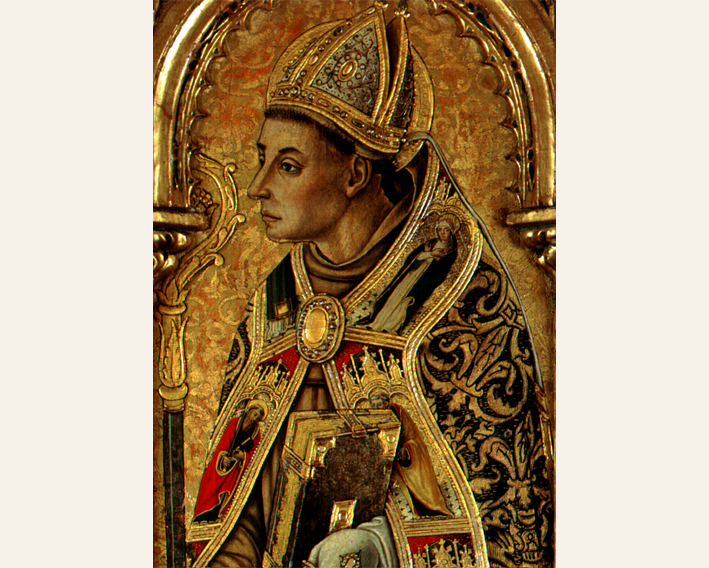
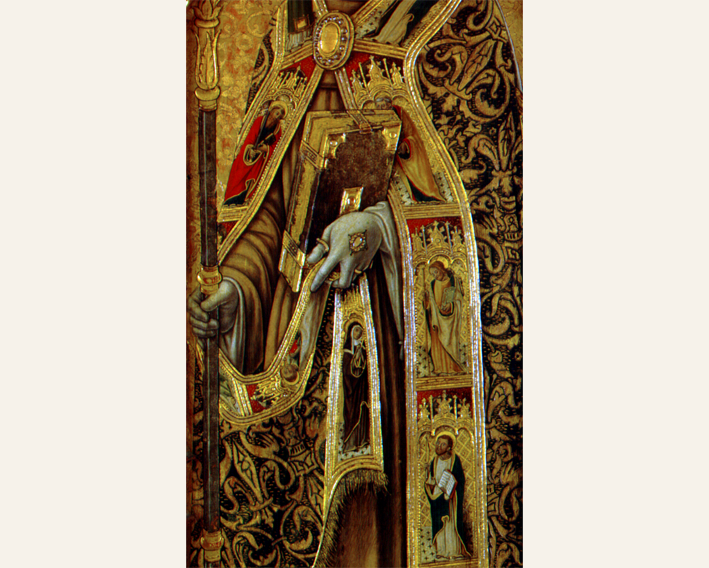
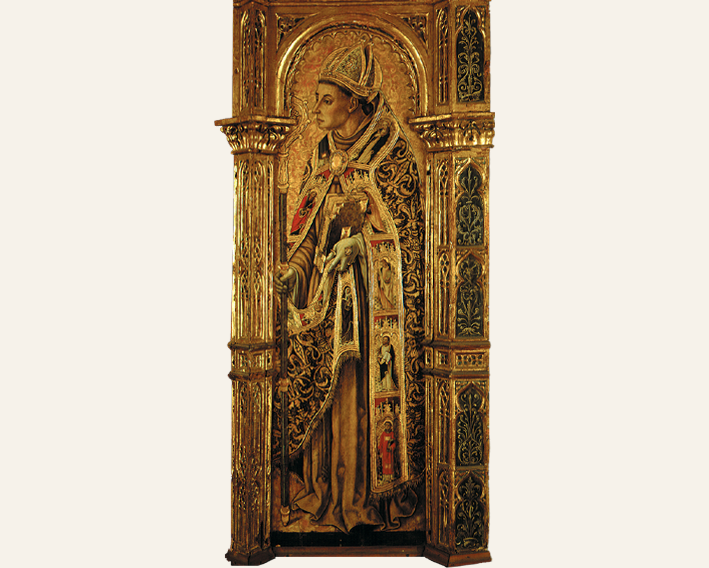
Among the figures in the lower register, St. Bonaventure, canonized in 1482, stands out. He wears a Franciscan habit covered by a cope richly decorated with gold, while holding the Lignum vitae, which is represented as an uprooted tree, composed of branches supporting twelve medallions of decreasing size depicting various saints, while in the center there is: a medallion with the Madonna and Child, under a pelican and a crucifix hanging from the trunk.
Sandra di Provvido had proposed a date later than 1489, but the still high style and the proximity to the polyptych of San Severino suggest that it may be anticipated by some time, perhaps not too far from 1482, a strict post quem, for the canonization of St. Bonaventure.
Vittore Crivelli
Polittico dell’Incoronazione
Tempera su tavola, 239×291 cm
Ordine inferiore
Incoronazione della Vergine, S. Bonaventura, S. Giovanni Battista, S. Francesco, S. Ludovico
Ordine superiore
Cristo morto tra la Vergine Addolorata e S. Giovanni Evangelista, S. Antonio da Padova, S. Elpidio, la Maddalena, S. Bernardino
Predella
Storie del Battista
Pinacoteca Civica – Palazzo ex Convento dei Filippini
Corso Baccio, 31
Sant’Elpidio a Mare (FM)
Polyptych, Sant'Elpidio a Mare
The large polyptych was created for the ancient monastery of the Poor Clares of Sant'Elpidio a Mare. Between 1766 and 1770, the structure of the church underwent several alterations, so the polyptych, which was located on the high altar, was moved to the left wall of the choir and the upper side panels were probably dismantled, resulting in the loss of the original frame in that area.
The work was given to the Observant Friars Minor, who kept it until 1860, when it was moved to the Council Chamber of the Town Hall of Sant'Elpidio a Mare. The first to attribute it to Vittore Crivelli was Cantalamessa in 1892, followed by all other scholars.
It is a polyptych composed of two registers: in the lower part, in the center, is the scene of the Coronation of the Virgin, while the side panels depict St. Bonaventure, St. John the Baptist, St. Francis, and St. Louis. The upper panels show a projecting tabernacle with the dead Christ and, on either side, the sorrowful Virgin and St. John the Evangelist, and finally, half-length portraits of St. Anthony of Padua, St. Elpidio, St. Mary Magdalene, and St. Bernard.
Supporting the entire weight of the work is a narrative predella, composed of six scenes representing stories from the life of St. John the Baptist, which, starting from the left, are: The Visitation, The Birth of the Baptist, Circumcision and Naming, Presentation in the Temple, The Baptist in the Desert, and Sermon of John the Baptist.
Sandra Di Provvido analyzes the central compartment and writes: “The Coronation of the Virgin is refined in ways that recall the works of Paolo Veneziano, the Vivarini, and Giovanni Bellini, which Carlo also kept in mind when he painted the Fabriano altarpiece, now in Brera.” The Madonna and Jesus are surrounded by a mandorla of seraphim, or red angels, and above them flies the dove, symbol of the Holy Spirit. This iconography is not very common in polyptychs, but in the Marche region there is a famous example, also painted for a Franciscan context, the Polyptych of Valle Romita (actually from the hermitage of Val di Sasso near Valleremita di Fabriano), painted by Gentile da Fabriano on commission from Chiavello Chiavelli and now in Brera.
Among the figures in the lower register, St. Bonaventure, canonized in 1482, stands out. He wears a Franciscan habit covered by a cope richly decorated with gold, while holding the Lignum vitae, which is represented as an uprooted tree, composed of branches supporting twelve medallions of decreasing size depicting various saints, while in the center there is: a medallion with the Madonna and Child, under a pelican and a crucifix hanging from the trunk.
Sandra di Provvido had proposed a date later than 1489, but the still high style and the proximity to the polyptych of San Severino suggest that it may be anticipated by some time, perhaps not too far from 1482, a strict post quem, for the canonization of St. Bonaventure.