Polyptych, Montefiore dell'Aso
Around 1475–76, Carlo Crivelli created a prestigious polyptych for the high altar of the Franciscan church of Montefiore dell'Aso. Unfortunately, the work was dismantled in the 1850s, and we must imagine it as similar to the polyptychs created for the cathedral and the church of San Domenico in Ascoli Piceno—in 1473 and 1476, respectively—composed of two orders and a series of saints in the predella. Today, the panels belonging to this altarpiece are divided among various collections around the world.
Furthermore, it can be noted that the dimensions of the panels are larger than those of the Ascoli paintings, so we can conclude that it must have been the largest polyptych ever created by the artist.
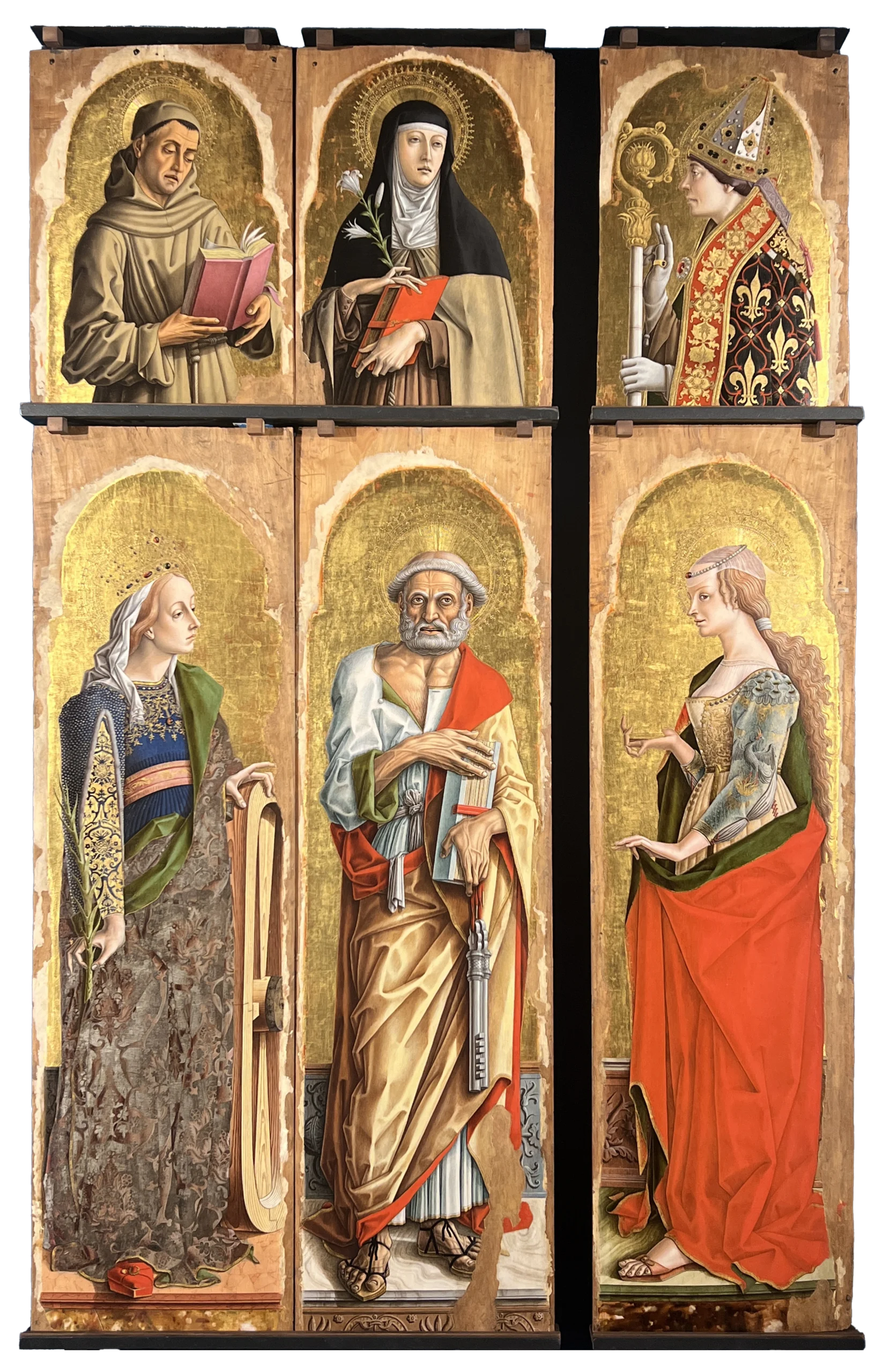
The polyptych consisted of: Madonna Enthroned with Child and St. Francis (Musées Royaux des Beaux-Arts in Brussels); St. Catherine of Alexandria, St. Peter, St. Mary Magdalene, St. Anthony of Padua, St. Clare, and St. Louis of Toulouse (Museum Complex of the Church of St. Francis of Montefiore dell'Aso); Pietà (National Gallery in London); Blessing Redeemer (Clark Art Institute in Williamstown); St. Andrew and St. Mark (?) (Honolulu, Academy of Arts); St. Peter and St. John the Evangelist (Detroit Institute of Arts); Apostle with a scroll in his hand (Metropolitan Museum in New York); St. John (? St. Luke) and Apostle (Upton House in Warwickshire).
Unfortunately, a panel from the upper order and some of the apostles that made up the predella are missing.
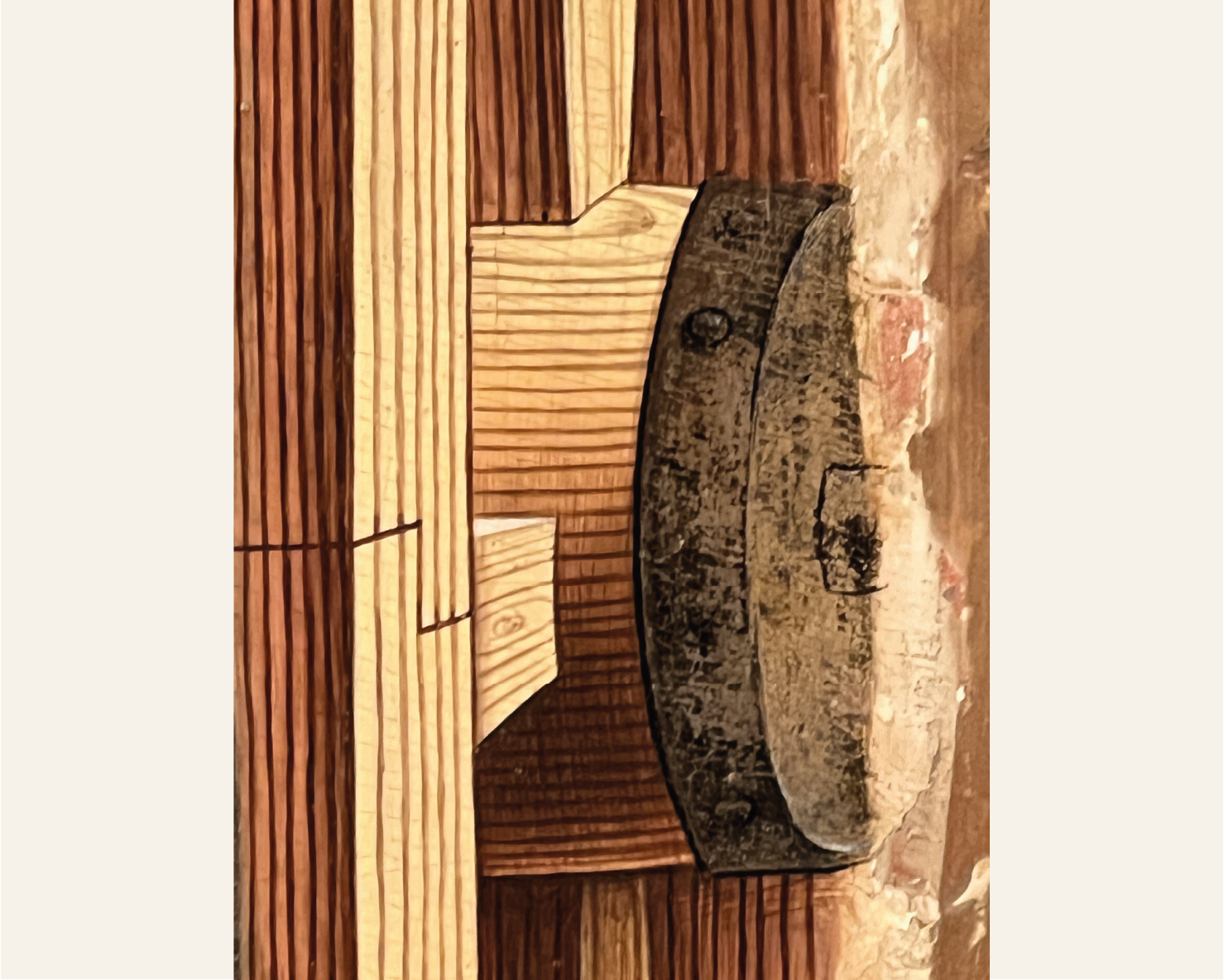
The six panels, which are kept in Montefiore dell'Aso, have recently been restored by Daphne De Luca, who also restored the wooden frame. However, as it was not relevant to the painting but rather more modern, it was not remounted on the panels but displayed on the wall next to the museum.
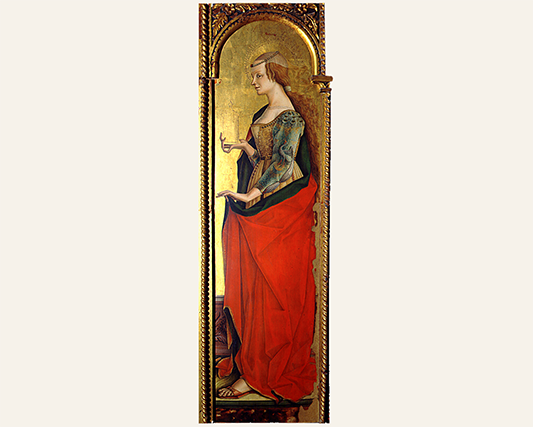
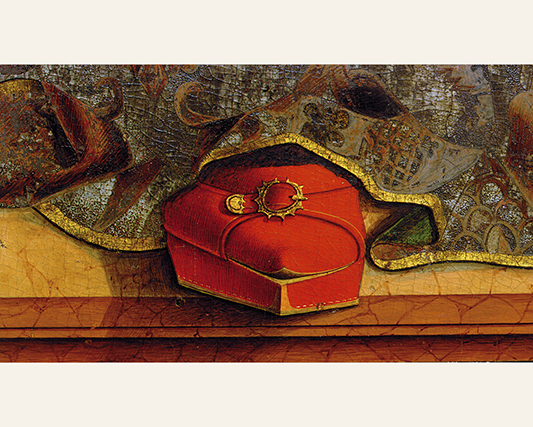
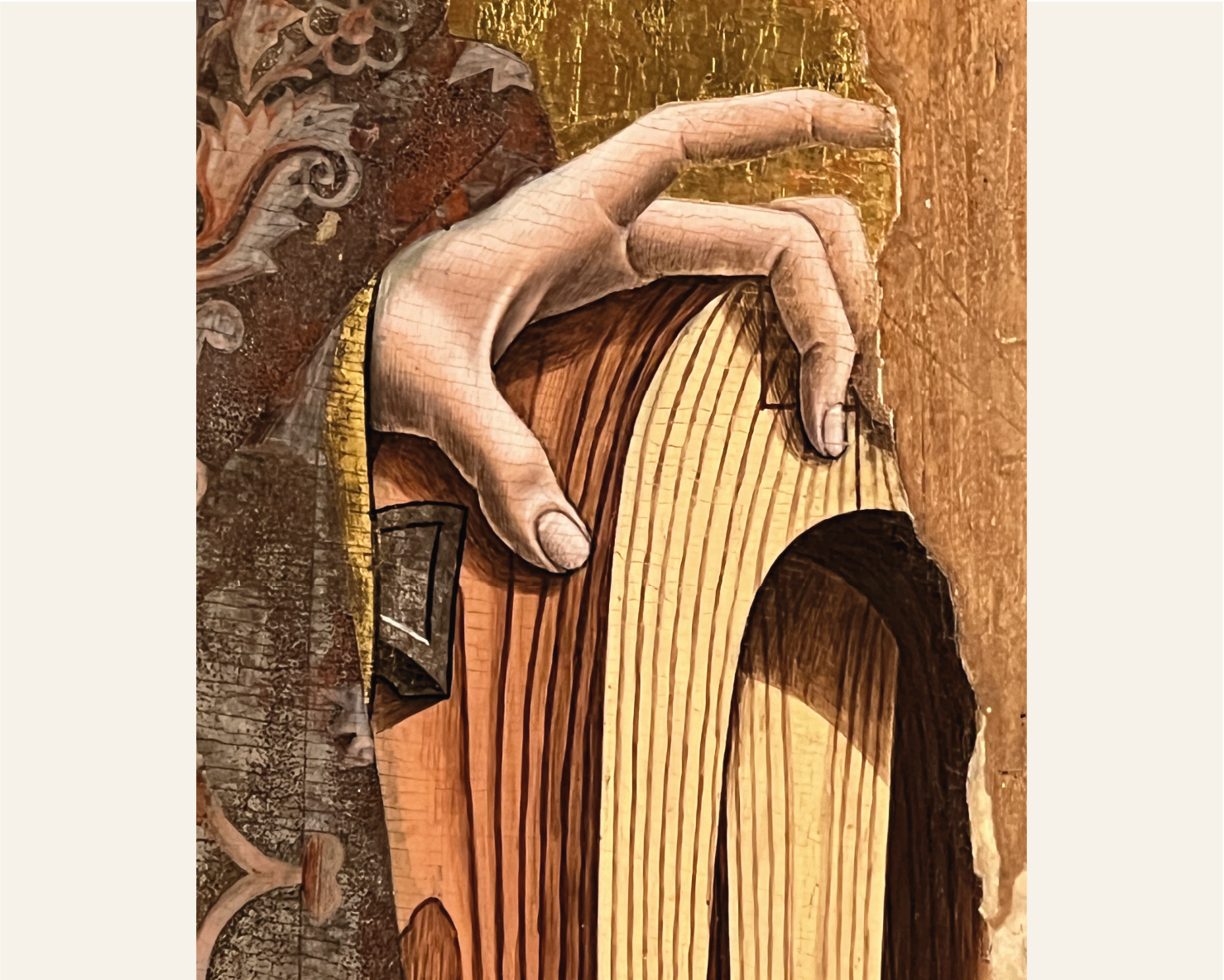
This allows us to see some details that were covered by the frame, such as the sketch of the hem of Saint Mary Magdalene's shirt. Paper was a very expensive material, so artists would make some sketches on the part of the panels that was covered by the frame. We can also see how Crivelli cleaned his brush on the edges of the panels.
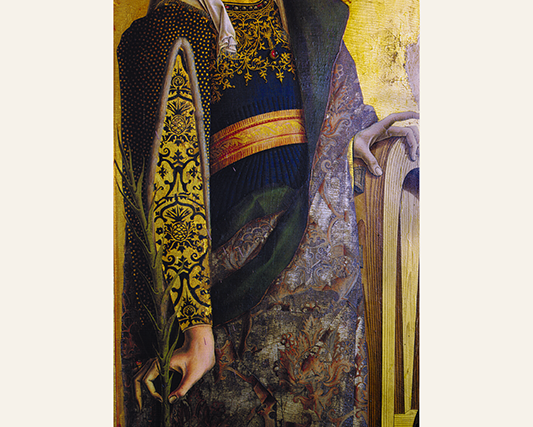
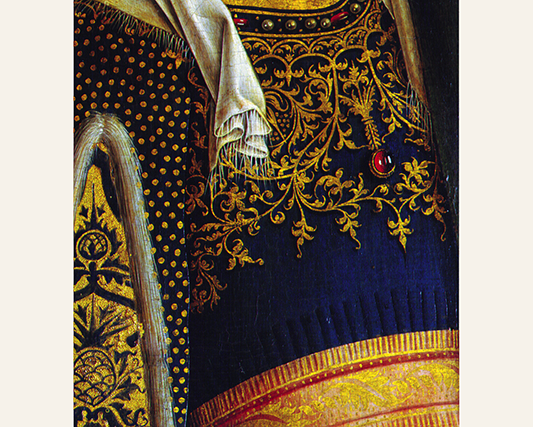
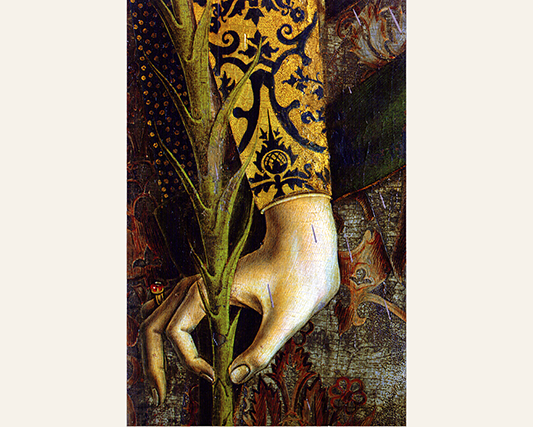
Saint Catherine of Alexandria delicately holds the long palm of martyrdom between two fingers, while resting her other hand on a large cogwheel. The saint is dressed in a rich robe, made with a very expensive pigment, lapis lazuli blue, which appears brilliant when viewed up close. The sleeve of the sumptuous dress simulates the thistle-patterned fabrics often used by Crivelli and is executed by alternating blue and gold pigments, which are applied over the bole using the gouache technique. In addition, the gold leaf is meticulously granulated, and we can imagine the extraordinary result achieved by the vibrant light of the candles.
Carlo decided to give his all to the beautiful cloak of Saint Catherine, made entirely of silver. This material, illuminated by the warm light of the candles, was used to create a white light that differed from that reflected by the gold leaf. Crivelli applied the foil to a red bolus using the gouache technique and then engraved the metal to form the folds of the fabric. After that, using white lead and red lacquer, the artist painted the thistle motif and grained some parts with a small punch.
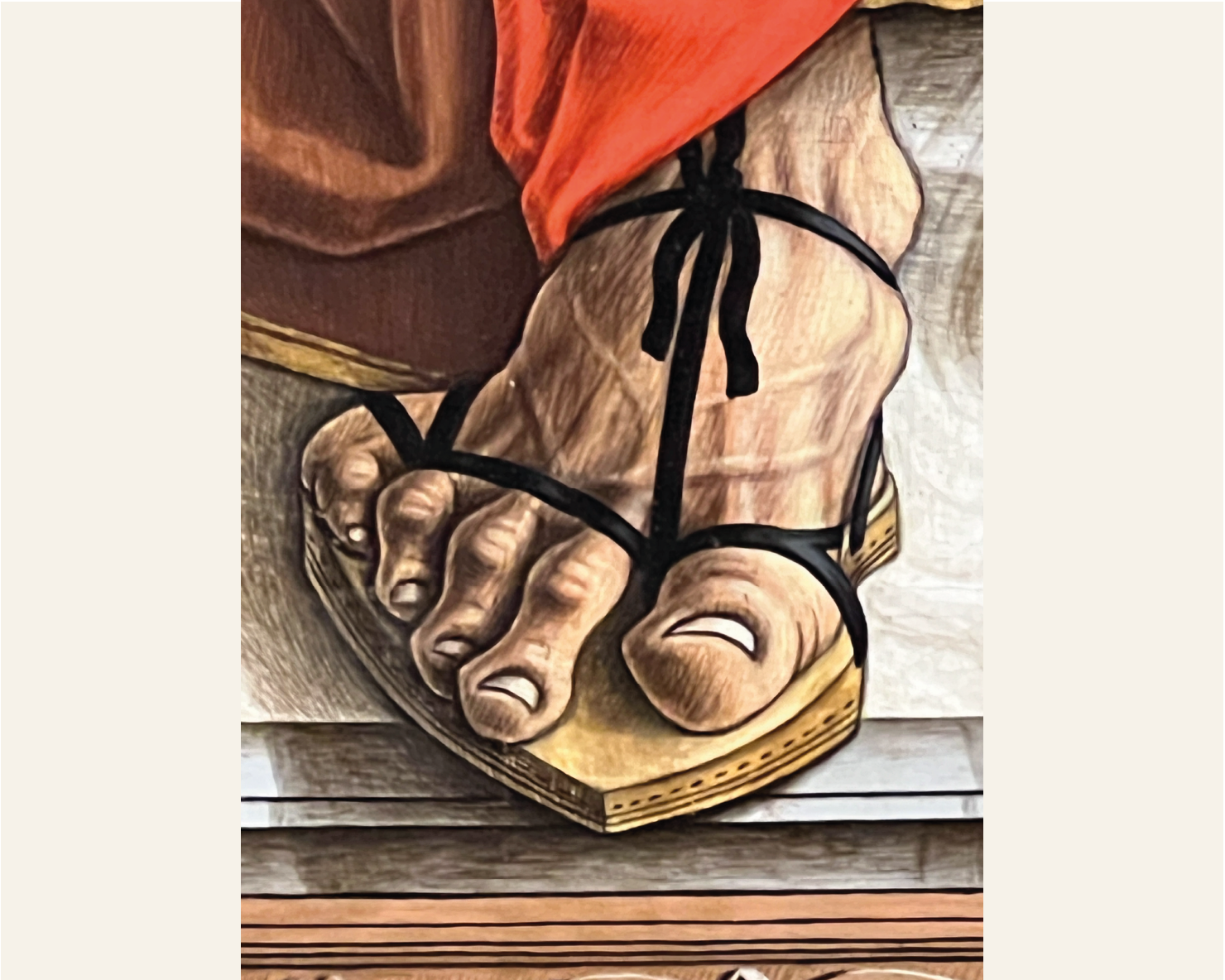
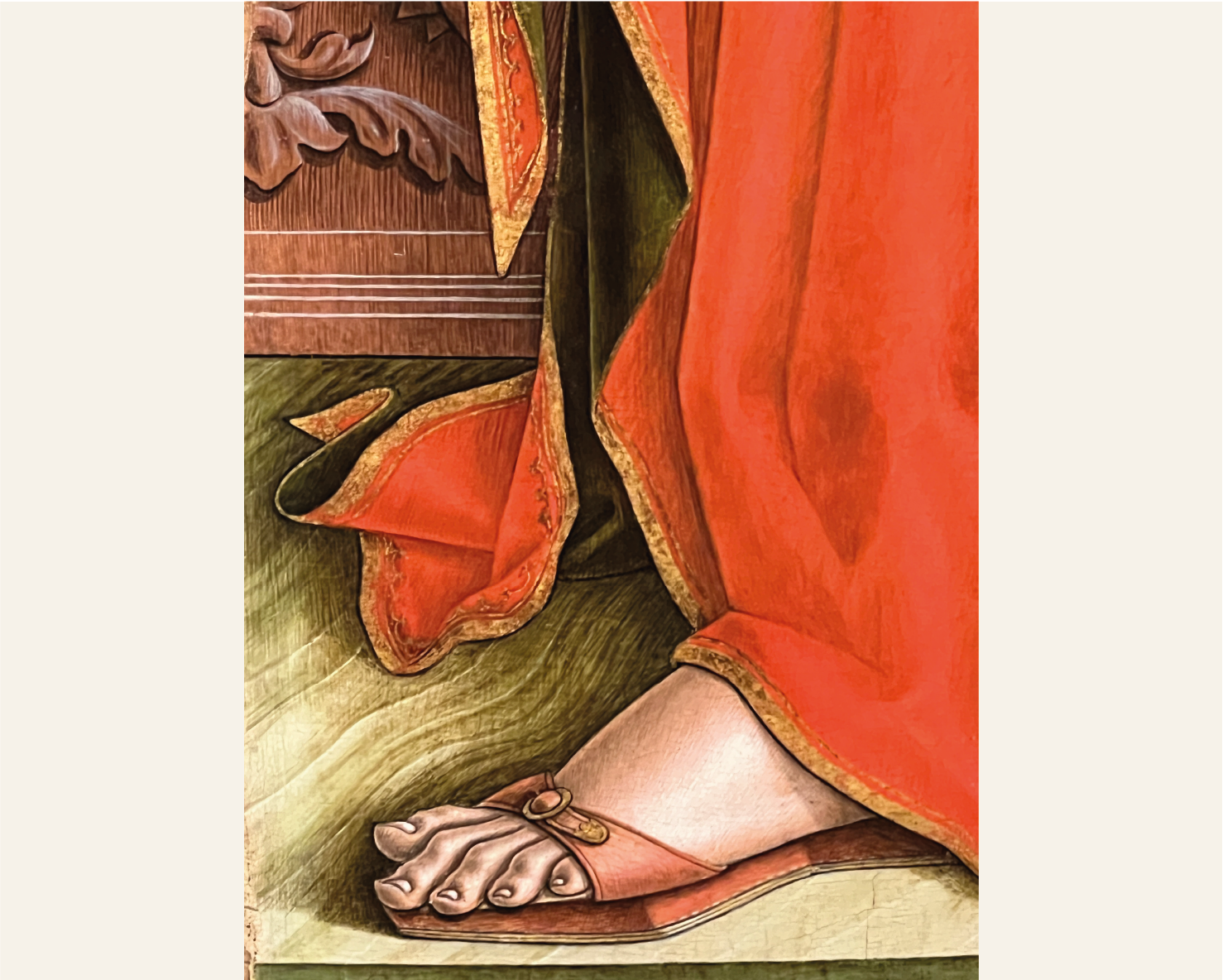
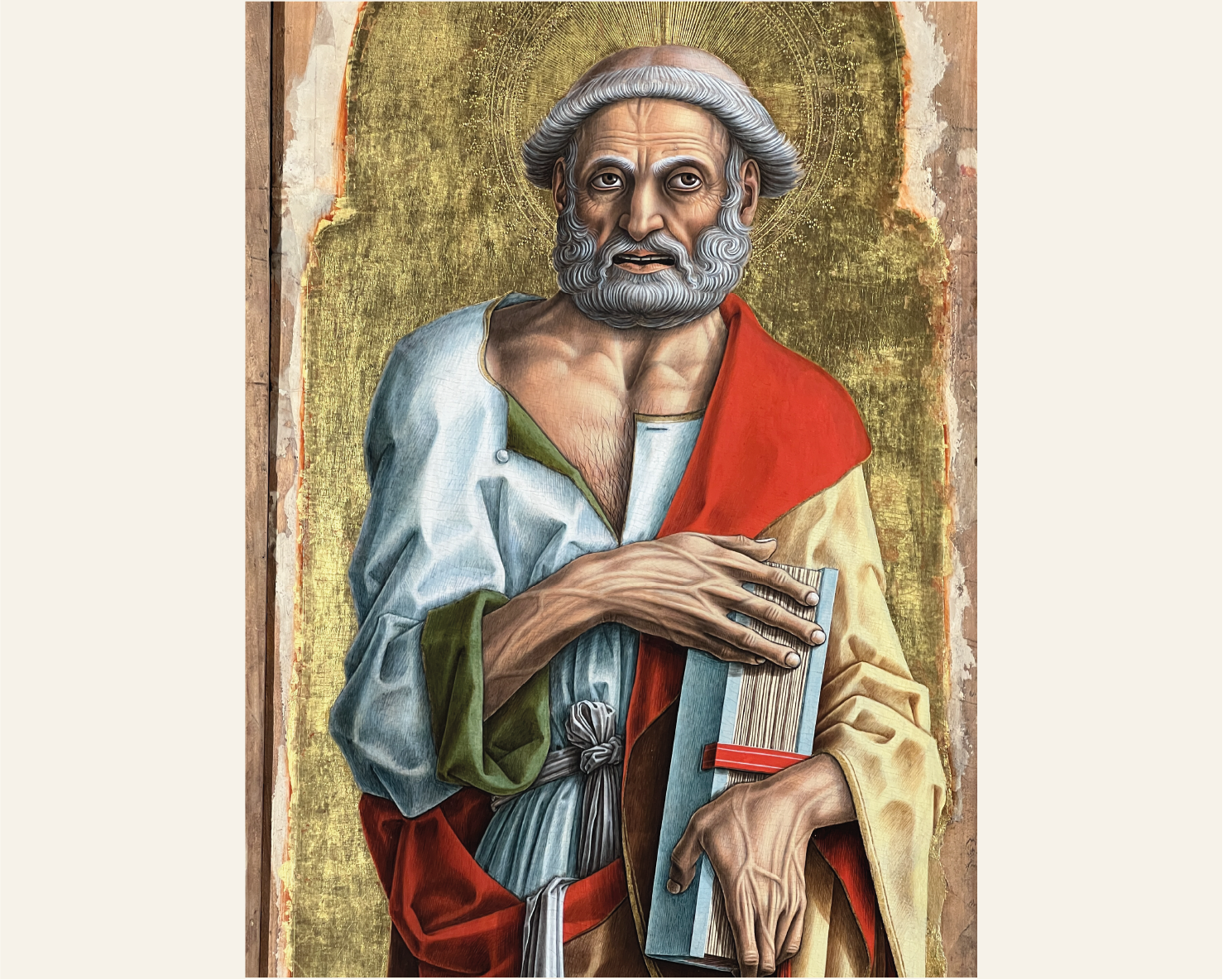
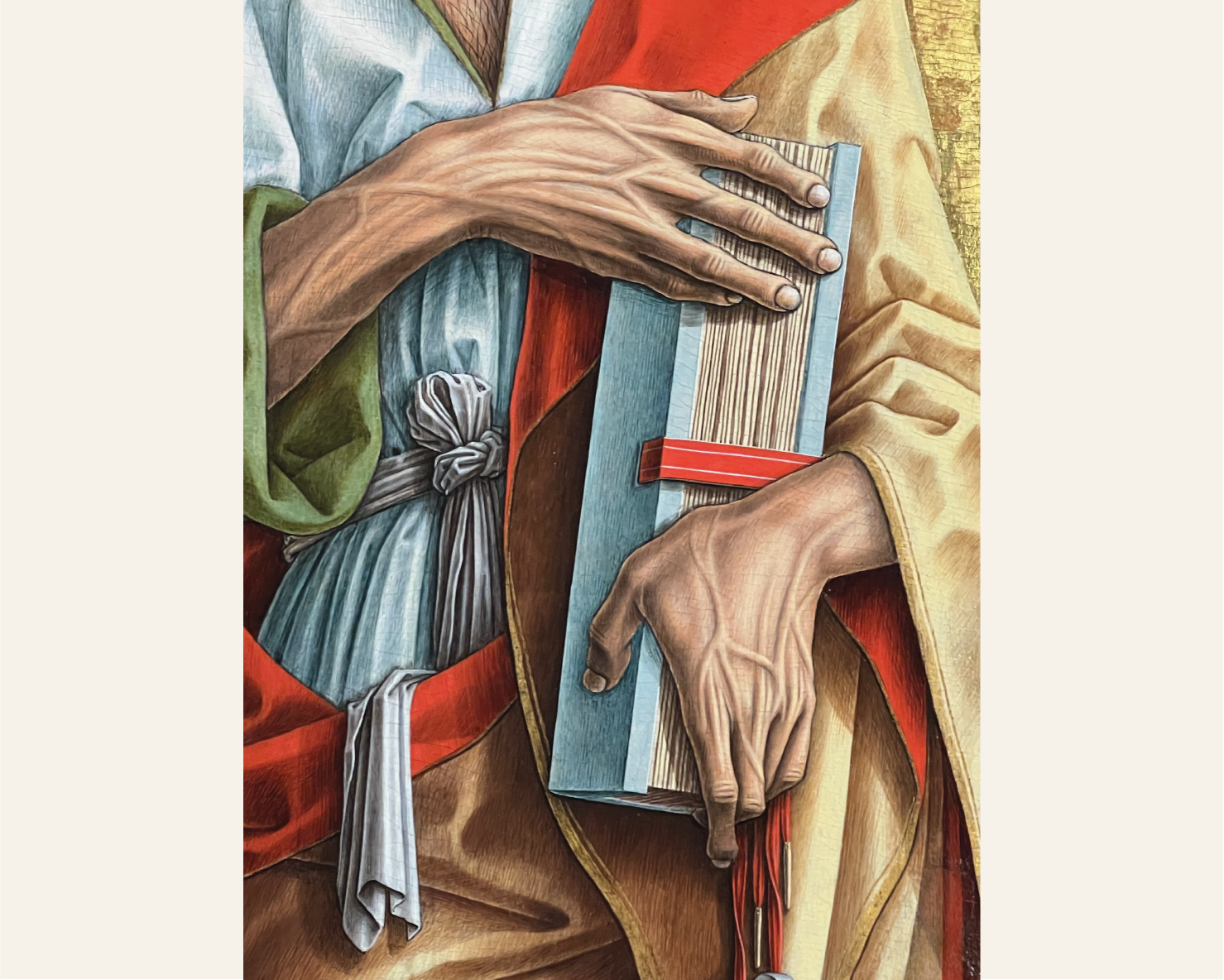
The panel next to it depicts St. Peter holding a large book in both hands and dangling the two large keys to Paradise. He is wearing a blue tunic edged with gold and a long yellow and red cloak that envelops him in soft folds. Carlo even depicts the veins on the hands of the elderly St. Peter, who also has hair and a thick gray beard.
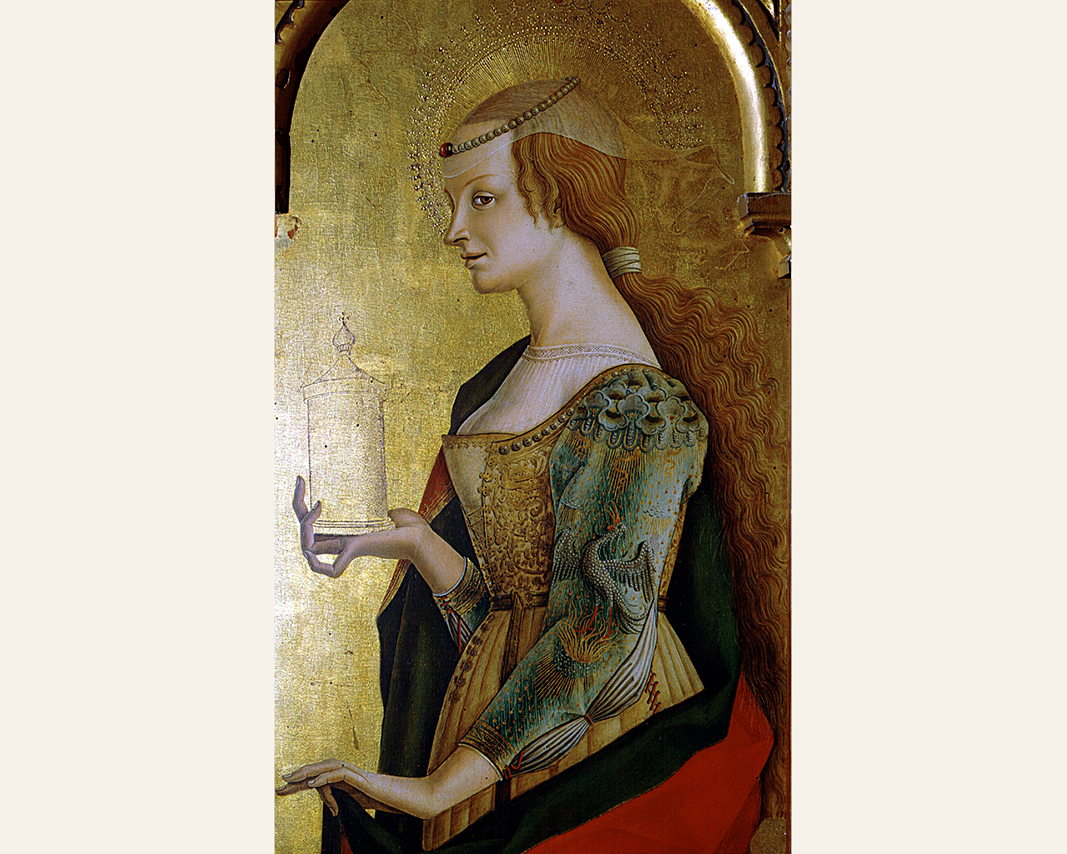
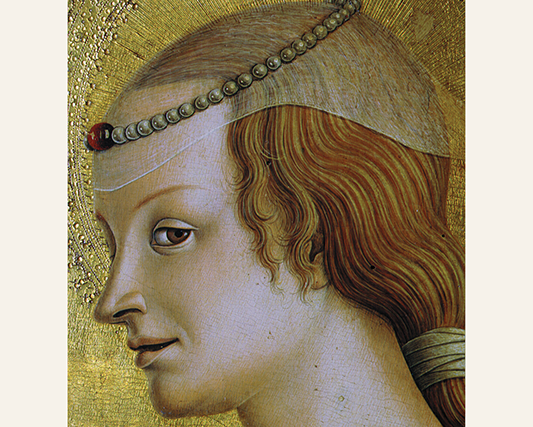
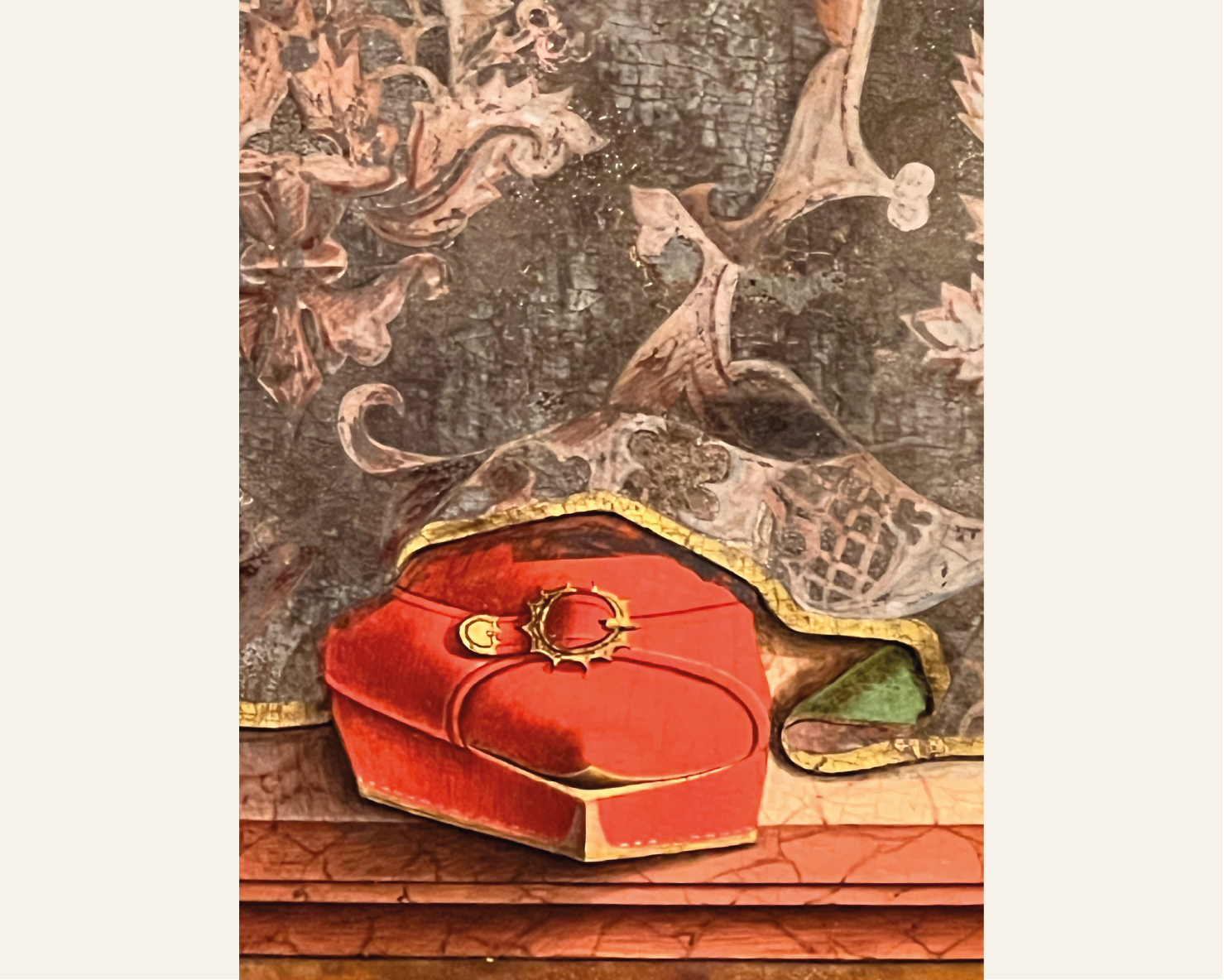
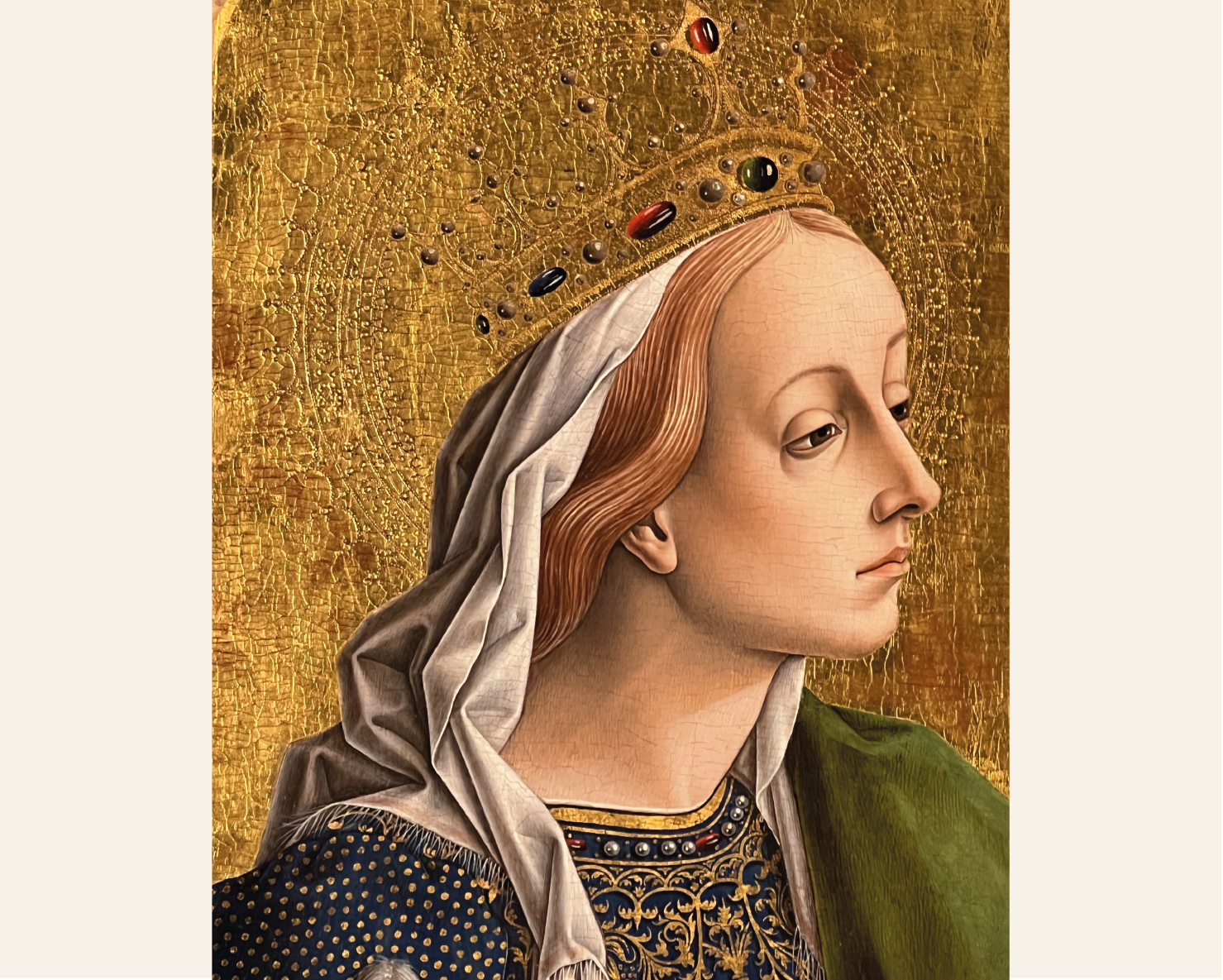
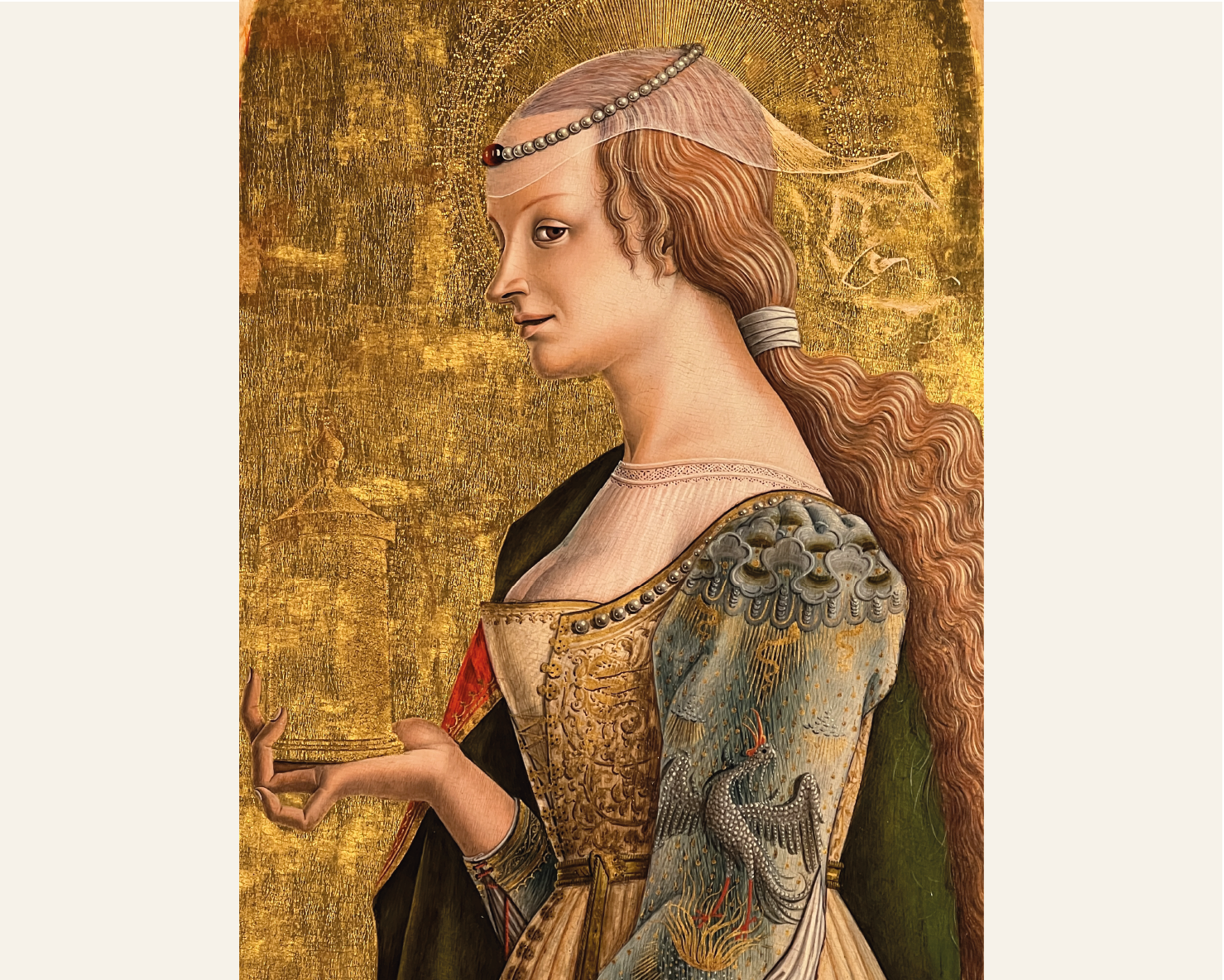
The last major panel preserved in Montefiore is the one depicting Saint Mary Magdalene. The figure is positioned sideways, holding a pyx in her right hand, which was created using numerous punches directly on the gold. The saint wears a beautiful dress richly decorated with gold filigree, with floral motifs on the corset, which fastens at the front with hooks. Saint Mary Magdalene wears a crown of pearls with a red stone in the center, overlaid with a transparent veil blowing in the wind. The woman is depicted as a young girl with long, wavy brown hair, rendered strand by strand using brushstrokes of various shades.
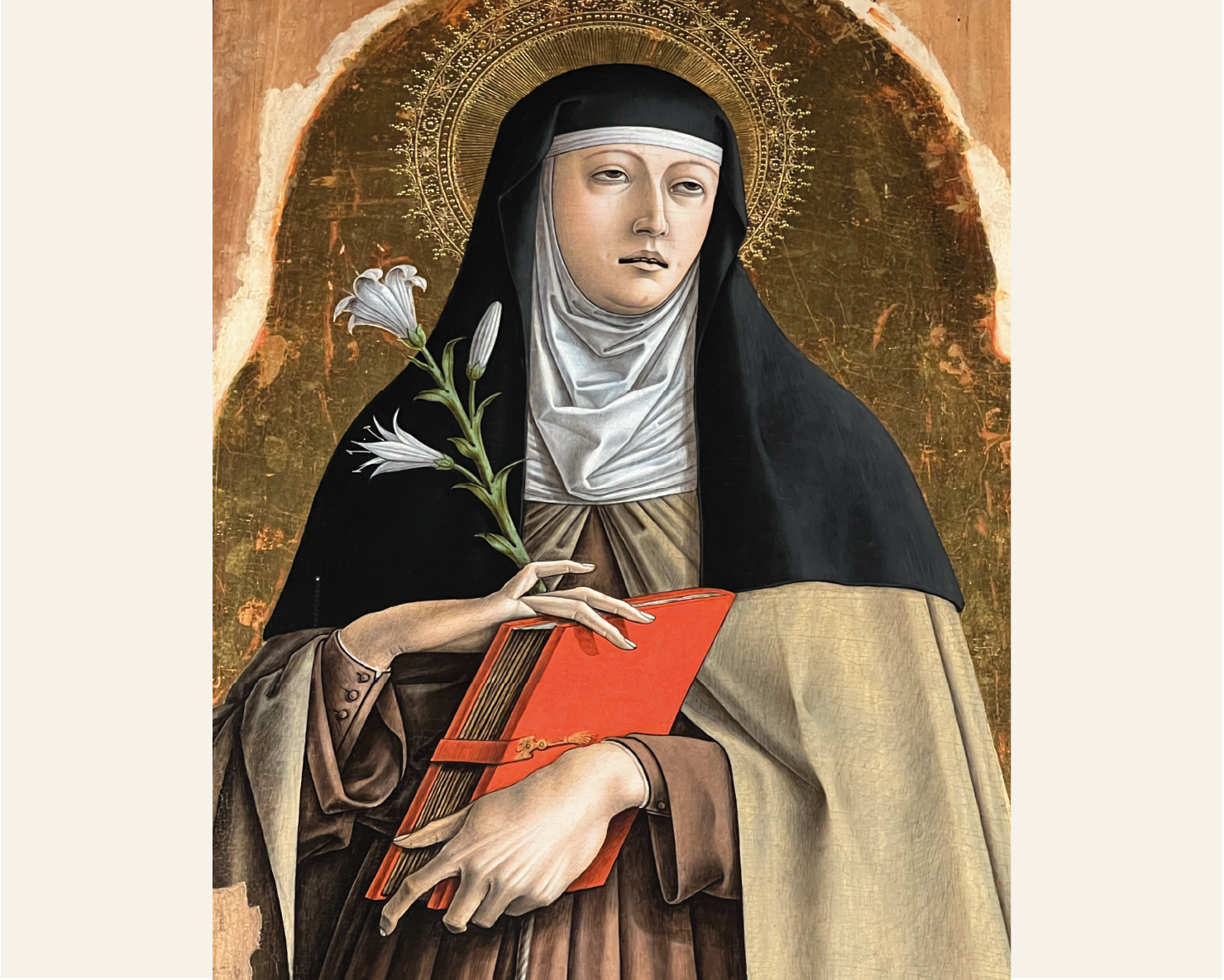
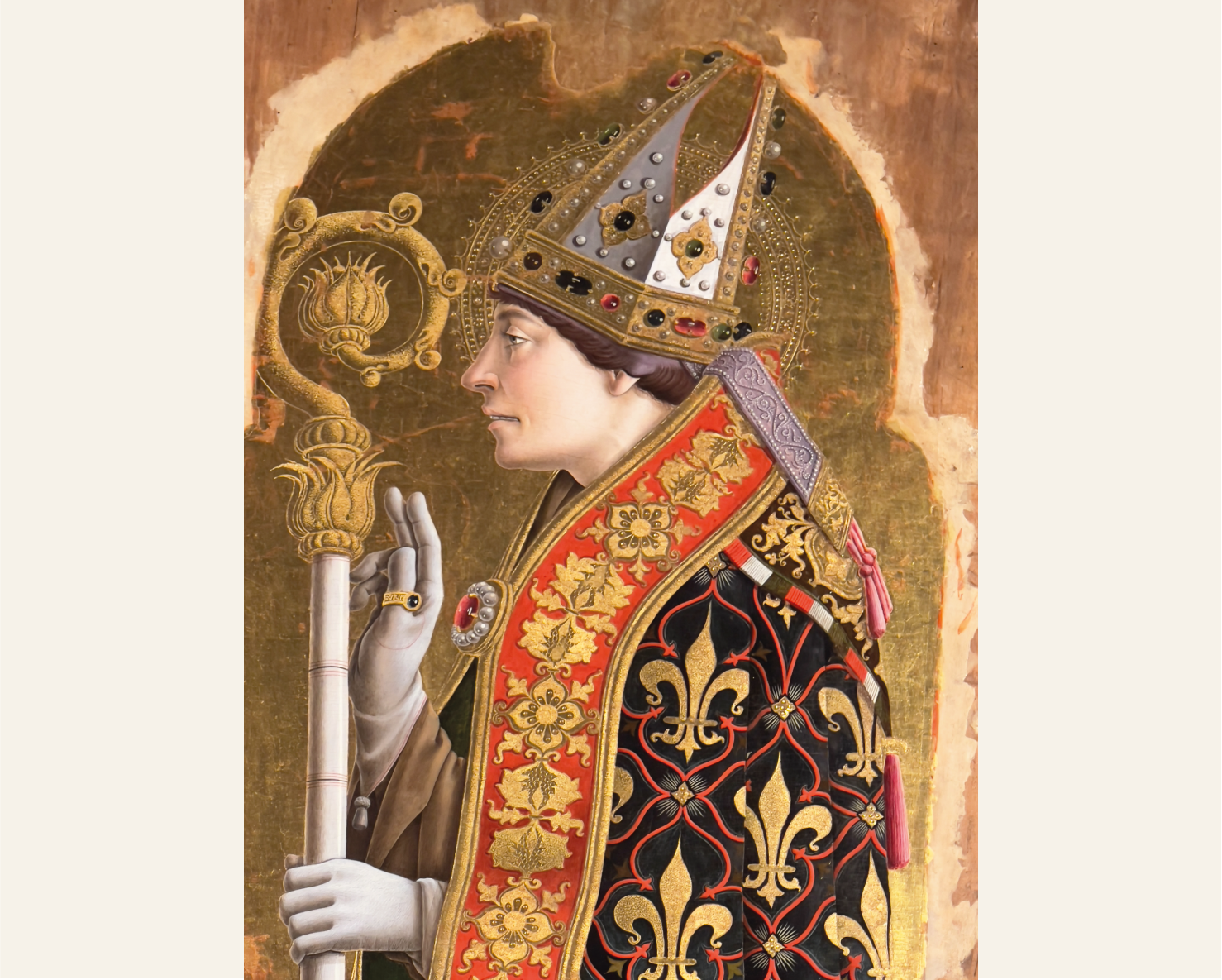
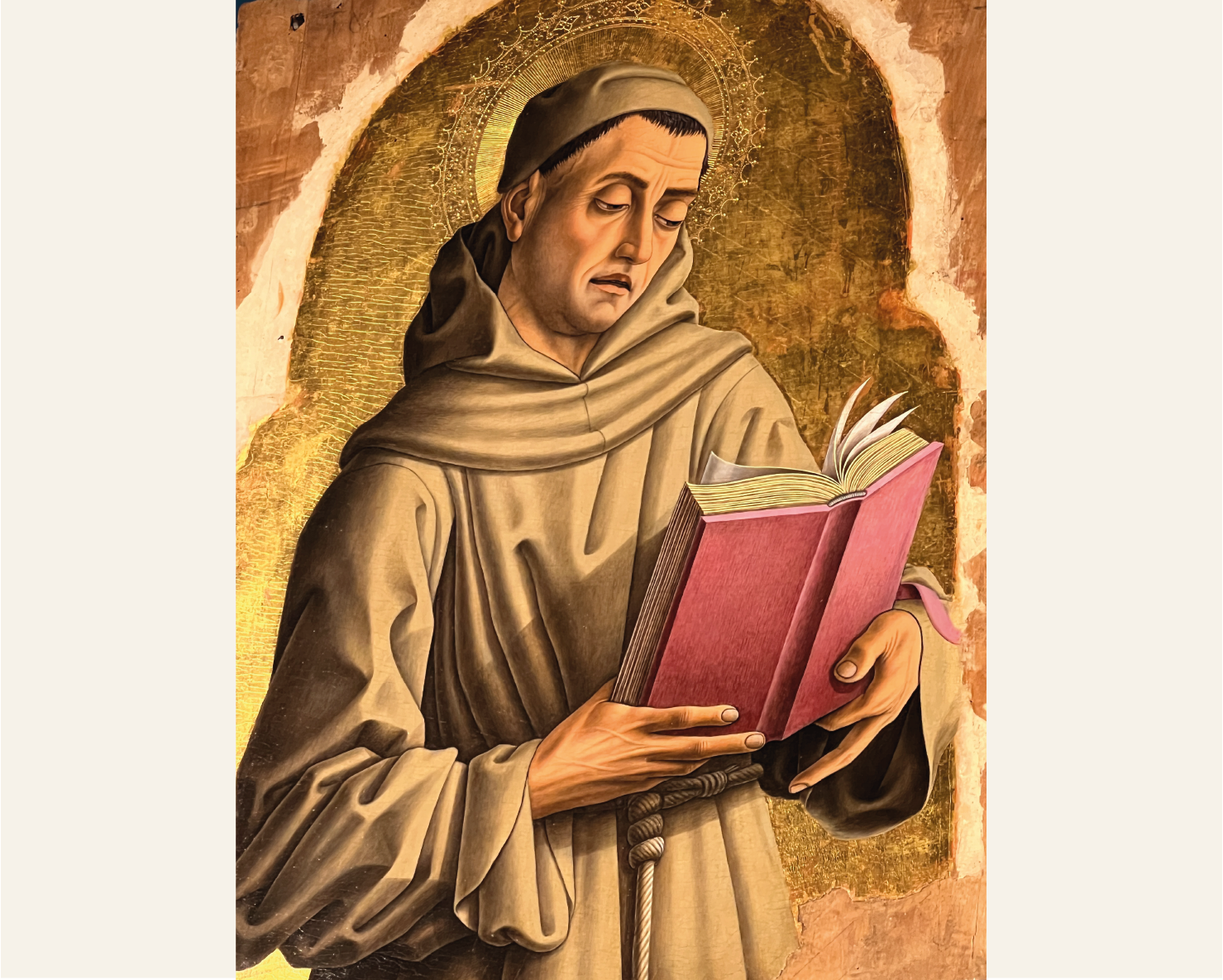
The panels in the upper register depict Saints Anthony, Clare, and Louis of Toulouse. Saint Anthony wears his usual habit, tied at the waist with a rope bearing three knots, symbolizing the Franciscan vows. He is shown reading a large red book with pages blowing in the wind. In the second panel, Carlo has depicted Saint Clare, also in a Franciscan habit, looking upwards and holding a book and a white lily. The last panel shows Saint Louis of Toulouse wearing a golden mitre embellished with numerous precious stones. The crosier, like the pyx of Saint Mary Magdalene, is engraved and granulated on gold leaf, which must have created a beautiful effect in the candlelight.
All the figures are set against a gilded background, applied using the gouache technique, and in some places, such as in the panel of Saint Catherine of Alexandria, the square shape of the gold leaf is visible.
Carlo Crivelli
Polittico di San Francesco, 1471-1473 ca
Tempera e oro su tavola
Ordine superiore
Santo francescano, S. Chiara, S. Ludovico di Tolosa
Dimensioni: ciascuna tavola 73×53 cm
Ordine inferiore
S. Caterina d’Alessandria, S. Pietro Apostolo, S. Maria Maddalena
Dimensioni: ciascuna tavola 182×52 cm
Polo Museale di San Francesco
Piazzale San Francesco, 1
Montefiore dell'Aso
Polyptych, Montefiore dell'Aso
Around 1475–76, Carlo Crivelli created a prestigious polyptych for the high altar of the Franciscan church of Montefiore dell'Aso. Unfortunately, the work was dismantled in the 1850s, and we must imagine it as similar to the polyptychs created for the cathedral and the church of San Domenico in Ascoli Piceno—in 1473 and 1476, respectively—composed of two orders and a series of saints in the predella. Today, the panels belonging to this altarpiece are divided among various collections around the world.
Furthermore, it can be noted that the dimensions of the panels are larger than those of the Ascoli paintings, so we can conclude that it must have been the largest polyptych ever created by the artist.
The polyptych consisted of: Madonna Enthroned with Child and St. Francis (Musées Royaux des Beaux-Arts in Brussels); St. Catherine of Alexandria, St. Peter, St. Mary Magdalene, St. Anthony of Padua, St. Clare, and St. Louis of Toulouse (Museum Complex of the Church of St. Francis of Montefiore dell'Aso); Pietà (National Gallery in London); Blessing Redeemer (Clark Art Institute in Williamstown); St. Andrew and St. Mark (?) (Honolulu, Academy of Arts); St. Peter and St. John the Evangelist (Detroit Institute of Arts); Apostle with a scroll in his hand (Metropolitan Museum in New York); St. John (? St. Luke) and Apostle (Upton House in Warwickshire).
Unfortunately, a panel from the upper order and some of the apostles that made up the predella are missing.
The six panels, which are kept in Montefiore dell'Aso, have recently been restored by Daphne De Luca, who also restored the wooden frame. However, as it was not relevant to the painting but rather more modern, it was not remounted on the panels but displayed on the wall next to the museum.
This allows us to see some details that were covered by the frame, such as the sketch of the hem of Saint Mary Magdalene's shirt. Paper was a very expensive material, so artists would make some sketches on the part of the panels that was covered by the frame. We can also see how Crivelli cleaned his brush on the edges of the panels.
Saint Catherine of Alexandria delicately holds the long palm of martyrdom between two fingers, while resting her other hand on a large cogwheel. The saint is dressed in a rich robe, made with a very expensive pigment, lapis lazuli blue, which appears brilliant when viewed up close. The sleeve of the sumptuous dress simulates the thistle-patterned fabrics often used by Crivelli and is executed by alternating blue and gold pigments, which are applied over the bole using the gouache technique. In addition, the gold leaf is meticulously granulated, and we can imagine the extraordinary result achieved by the vibrant light of the candles.
Carlo decided to give his all to the beautiful cloak of Saint Catherine, made entirely of silver. This material, illuminated by the warm light of the candles, was used to create a white light that differed from that reflected by the gold leaf. Crivelli applied the foil to a red bolus using the gouache technique and then engraved the metal to form the folds of the fabric. After that, using white lead and red lacquer, the artist painted the thistle motif and grained some parts with a small punch.
The panel next to it depicts St. Peter holding a large book in both hands and dangling the two large keys to Paradise. He is wearing a blue tunic edged with gold and a long yellow and red cloak that envelops him in soft folds. Carlo even depicts the veins on the hands of the elderly St. Peter, who also has hair and a thick gray beard.
The last major panel preserved in Montefiore is the one depicting Saint Mary Magdalene. The figure is positioned sideways, holding a pyx in her right hand, which was created using numerous punches directly on the gold. The saint wears a beautiful dress richly decorated with gold filigree, with floral motifs on the corset, which fastens at the front with hooks. Saint Mary Magdalene wears a crown of pearls with a red stone in the center, overlaid with a transparent veil blowing in the wind. The woman is depicted as a young girl with long, wavy brown hair, rendered strand by strand using brushstrokes of various shades.
The panels in the upper register depict Saints Anthony, Clare, and Louis of Toulouse. Saint Anthony wears his usual habit, tied at the waist with a rope bearing three knots, symbolizing the Franciscan vows. He is shown reading a large red book with pages blowing in the wind. In the second panel, Carlo has depicted Saint Clare, also in a Franciscan habit, looking upwards and holding a book and a white lily. The last panel shows Saint Louis of Toulouse wearing a golden mitre embellished with numerous precious stones. The crosier, like the pyx of Saint Mary Magdalene, is engraved and granulated on gold leaf, which must have created a beautiful effect in the candlelight.
All the figures are set against a gilded background, applied using the gouache technique, and in some places, such as in the panel of Saint Catherine of Alexandria, the square shape of the gold leaf is visible.