Vittore Crivelli
Pannelli superstiti di Polittico, 1482 – 1490
Tempera su tavola
Pannelli inferiori
S. Giovanni Battista, S. Leonardo, Beato Giacomo della Marca
Dimensioni: 99 x 30 cm; 115 x 35 cm; 110 x 33 cm
Pannello superiore
S. Placido
Dimensioni: 66 x 30 cm
Pinacoteca Parrocchiale
Corso Vittorio Emanuele, 132
Ripatransone (AP)
Panels, Ripatransone
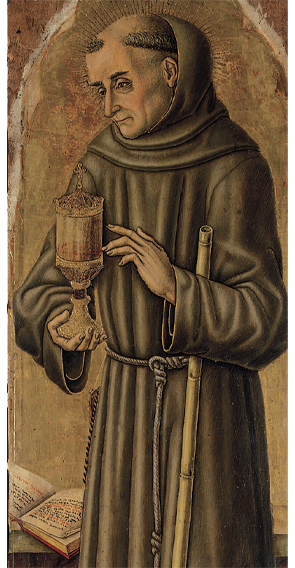
The Civic Art Gallery in Ripatransone houses four panels painted by Vittore Crivelli. Blessed Giacomo della Marca is depicted with a radiant halo, dressed in a classic Franciscan habit tied at the waist with a rope belt. The blessed saint carries a pilgrim's staff and a reliquary containing the blood of Christ.
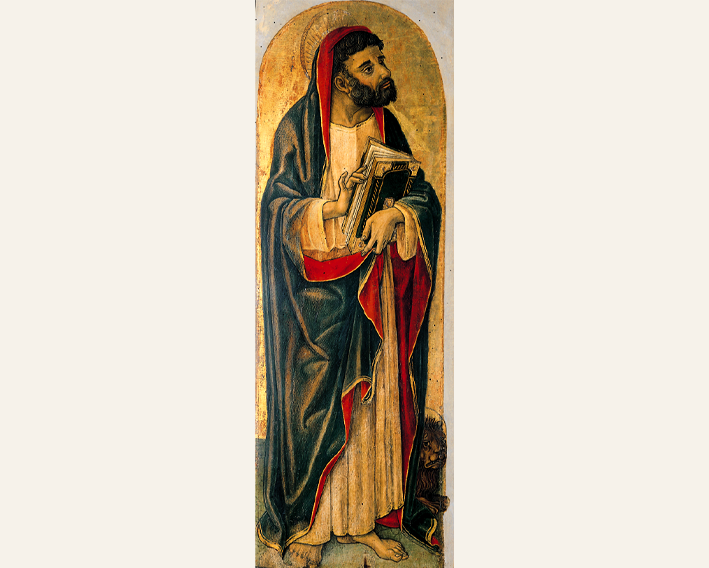
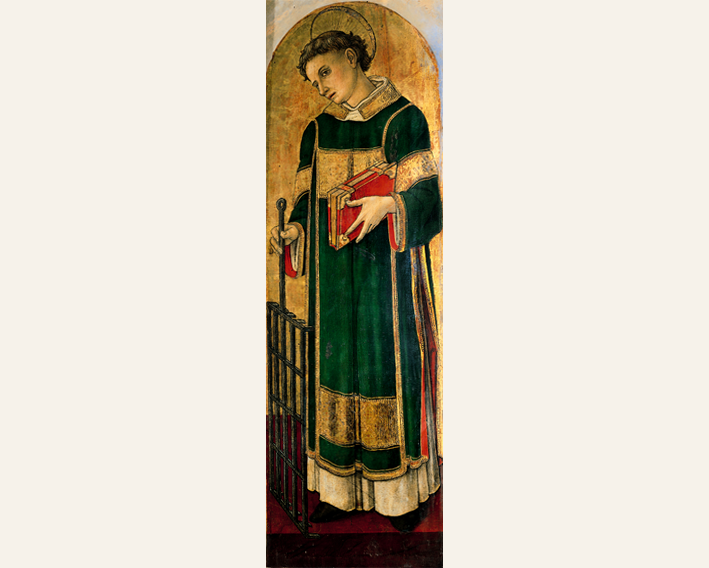
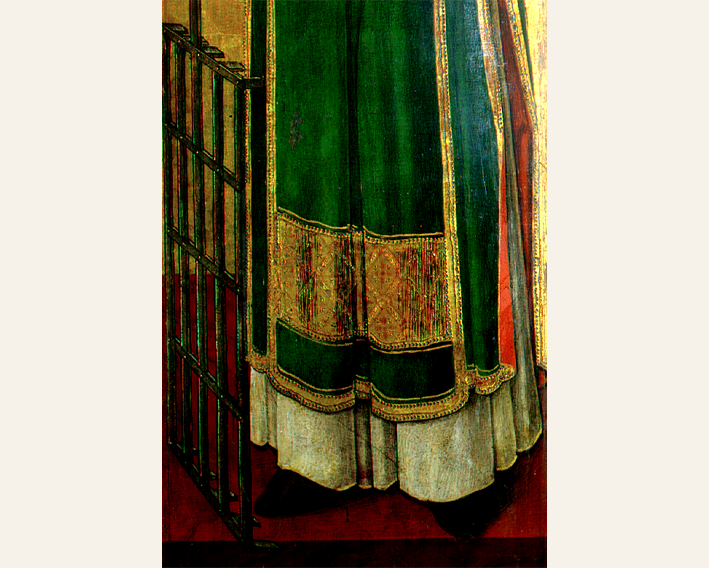
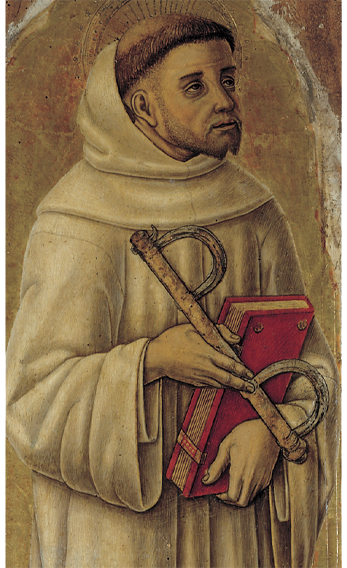
Saint Leonard is recognizable because he is holding a red book and, above all, because of the stocks used to immobilize prisoners' feet, of whom he became the patron saint.
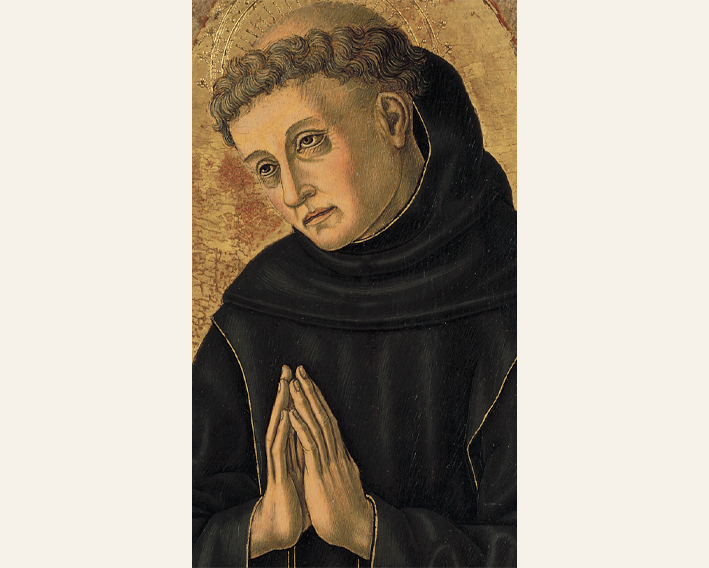
Saint Placido, on the other hand, is depicted in half-length, also against a gold background, with his gaze turned upwards and his hands joined in prayer.
These three panels made up the large Monteprandone pentaptych, which consisted of two registers and was visually reconstructed in Alessandro Delpriori's 2013 essay. The scholar hypothesised that at the base of the altarpiece there may have been a predella, which was not mentioned in the 19th-century description, but which may have consisted of two saints now in a private collection in Florence: Bernardino da Siena and an anonymous Franciscan.
The polyptych consisted of a Saint Ursula, which was kept in the Civic Art Gallery of Ripatransone until its theft in 1983, and was located in the upper register of the polyptych together with other saints: Peter (Norfolk, Chrysler Museum of Art), Jerome (Norfolk, Chrysler Museum of Art) and Placid. In the central part was the dead Christ supported by three angels, which passed into the collection of Countess Reppi in Ancona, then into the collection of Count Alessandro Conti Bonacossi, and finally to the Silberman Gallery in New York. Unfortunately, we no longer have any information about this work, which is probably in a private collection, as is the case with St. Nicholas of Bari and the Madonna and Child, which were included in the lower register.
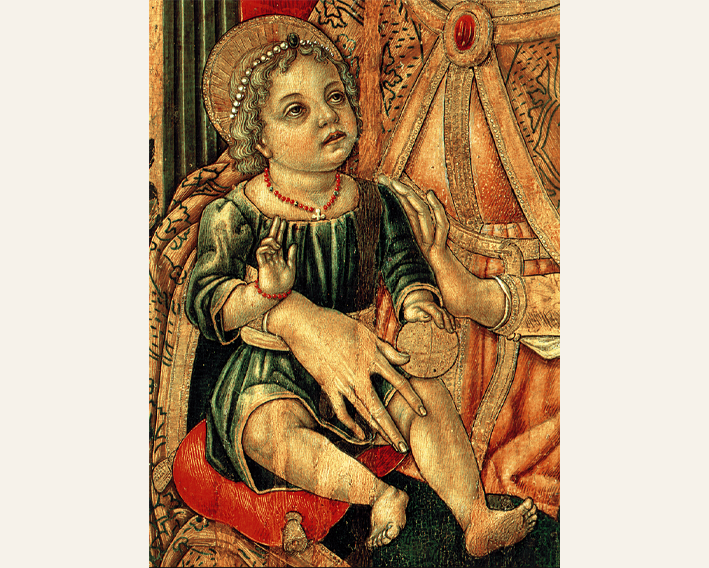
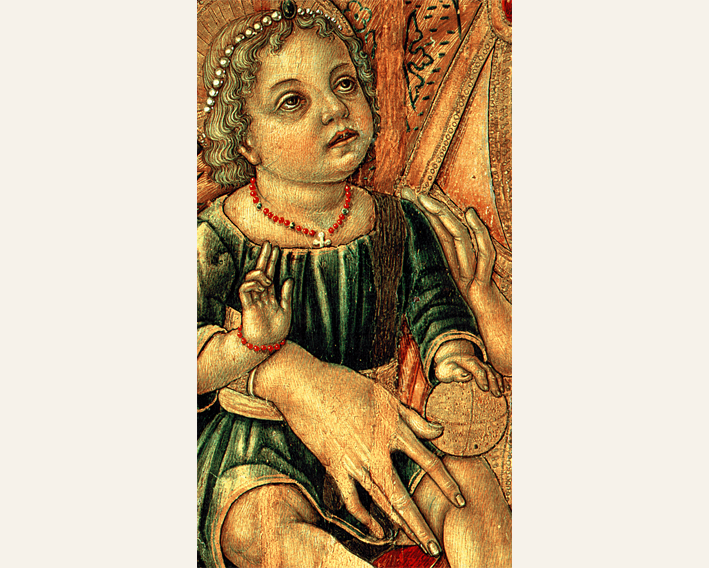
Therefore, the saints depicted in the main panels are: Leonard, Nicholas of Bari, Anthony the Abbot (formerly in a private collection in Munich, then at Grassi in New York, and now in a private collection in the same city) and Blessed James of the Marches.
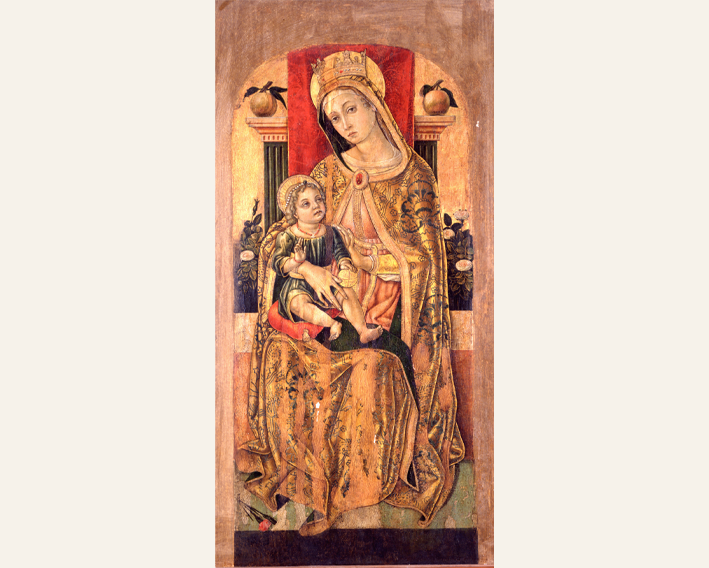
In the monograph written by Sandra Di Provvido in 1997, there is a photo of a triptych consisting of Saint Nicholas of Bari, Madonna and Child, and Saint Anthony the Abbot. It was on display until 1844 in the church of Monteprandone, then moved to various collections until it last appeared at Christie's auction house, specifically in a sale on April 1, 1960, where it was purchased by the Bergamo antique dealer Lorenzelli, but then lost track of.
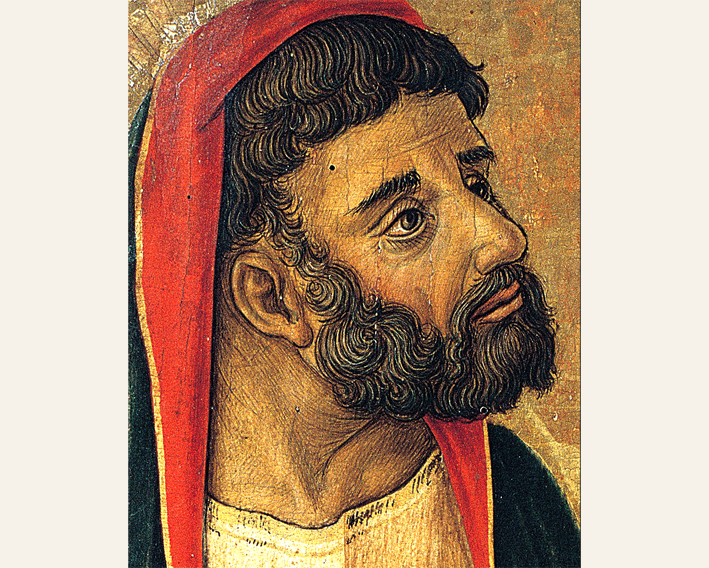
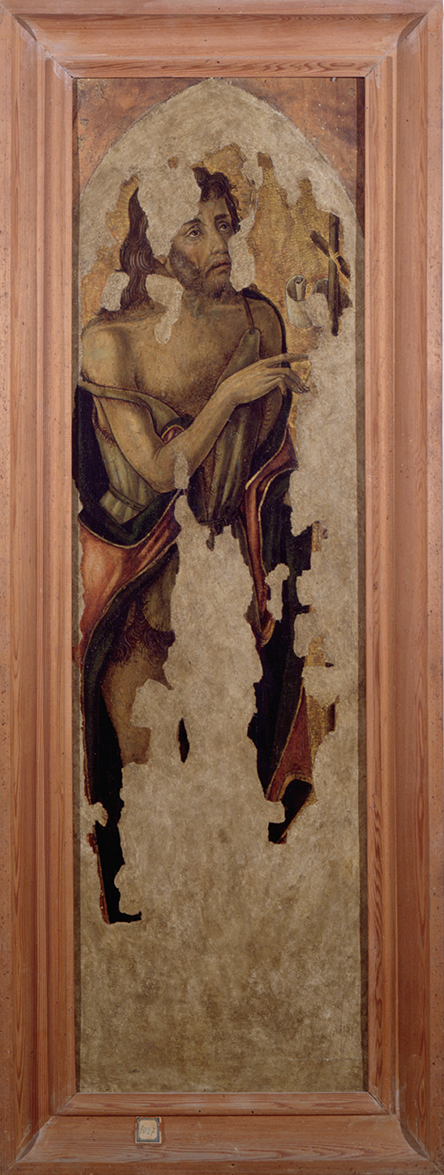
Finally, in the same art gallery in Ripatransone, there is a panel depicting St. John the Baptist, unfortunately badly damaged, in which only the face and bust of the saint are visible. He is recognizable because he is wearing pilgrim's clothing and the upper part of his processional cross is still visible, wrapped in a white scroll. Unfortunately, the origin of this work is unknown, but it was probably part of the side panel of a dismantled polyptych.
Panels, Ripatransone
The Civic Art Gallery in Ripatransone houses four panels painted by Vittore Crivelli. Blessed Giacomo della Marca is depicted with a radiant halo, dressed in a classic Franciscan habit tied at the waist with a rope belt. The blessed saint carries a pilgrim's staff and a reliquary containing the blood of Christ.
Saint Leonard is recognizable because he is holding a red book and, above all, because of the stocks used to immobilize prisoners' feet, of whom he became the patron saint.
Saint Placido, on the other hand, is depicted in half-length, also against a gold background, with his gaze turned upwards and his hands joined in prayer.
These three panels made up the large Monteprandone pentaptych, which consisted of two registers and was visually reconstructed in Alessandro Delpriori's 2013 essay. The scholar hypothesised that at the base of the altarpiece there may have been a predella, which was not mentioned in the 19th-century description, but which may have consisted of two saints now in a private collection in Florence: Bernardino da Siena and an anonymous Franciscan.
The polyptych consisted of a Saint Ursula, which was kept in the Civic Art Gallery of Ripatransone until its theft in 1983, and was located in the upper register of the polyptych together with other saints: Peter (Norfolk, Chrysler Museum of Art), Jerome (Norfolk, Chrysler Museum of Art) and Placid. In the central part was the dead Christ supported by three angels, which passed into the collection of Countess Reppi in Ancona, then into the collection of Count Alessandro Conti Bonacossi, and finally to the Silberman Gallery in New York. Unfortunately, we no longer have any information about this work, which is probably in a private collection, as is the case with St. Nicholas of Bari and the Madonna and Child, which were included in the lower register.
Therefore, the saints depicted in the main panels are: Leonard, Nicholas of Bari, Anthony the Abbot (formerly in a private collection in Munich, then at Grassi in New York, and now in a private collection in the same city) and Blessed James of the Marches.
In the monograph written by Sandra Di Provvido in 1997, there is a photo of a triptych consisting of Saint Nicholas of Bari, Madonna and Child, and Saint Anthony the Abbot. It was on display until 1844 in the church of Monteprandone, then moved to various collections until it last appeared at Christie's auction house, specifically in a sale on April 1, 1960, where it was purchased by the Bergamo antique dealer Lorenzelli, but then lost track of.
Finally, in the same art gallery in Ripatransone, there is a panel depicting St. John the Baptist, unfortunately badly damaged, in which only the face and bust of the saint are visible. He is recognizable because he is wearing pilgrim's clothing and the upper part of his processional cross is still visible, wrapped in a white scroll. Unfortunately, the origin of this work is unknown, but it was probably part of the side panel of a dismantled polyptych.